To remove a stain from natural stone, identify the stain type, then apply a poultice—a paste of absorbent powder and a chemical solvent—that pulls the stain out as it dries. In 2026, poultice methods remain the only reliable fix for oil, rust, ink, and organic stains on marble, granite, and travertine when done with the correct solvent for each stain.
What Is a Poultice and How Does It Remove Stone Stains?
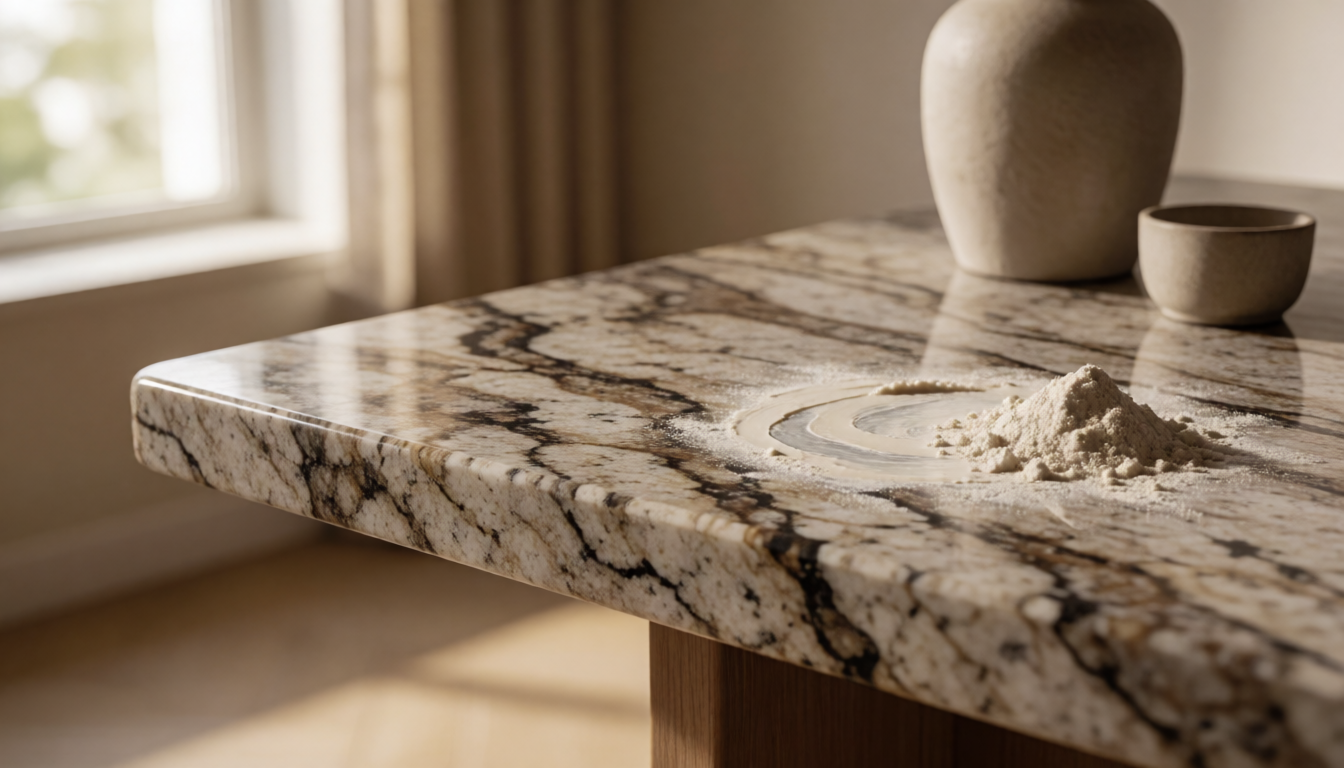
A poultice is a thick paste—usually made from absorbent kaolin clay, diatomaceous earth, or baking soda—mixed with a solvent chosen for the stain chemistry. You spread it over the stain, cover it with plastic, and let it dry 24–48 hours. As the paste dries, it draws the stain out of the stone’s pores and into the absorbent material. According to Marble Seven’s 2026 care guide, poultices resolve 80–90% of deep stains that surface cleaning cannot touch. The critical rule: match the solvent to the stain. Using the wrong solvent wastes time and can worsen discoloration. Glady Stone includes a stain-identification chart with every maintenance kit so installers pick the right formula on the first try.
Why Does Stain Type Matter for 2026 Removal Protocols?
- Oil-based stains (cooking oil, grease): Require a degreasing solvent like acetone or ammonia; poultice pulls the oil from the pore.
- Organic stains (coffee, wine, leaves): Respond to a 6% hydrogen peroxide or bleach poultice that bleaches the pigment out.
- Metal / rust stains: Need a commercial rust remover (oxalic acid); never use bleach, which sets rust permanently.
- Ink stains: On calcareous stone use bleach poultice; on siliceous stone use acetone. Wrong choice fails or etches.
Stain Type vs. Correct 2026 Poultice Solvent
| Stain Type | Best Solvent | Dry Time | Stone Caution |
|---|---|---|---|
| Oil / Grease | Acetone or ammonia | 24–48 hrs | Avoid on sealed surfaces pre-test |
| Coffee / Wine | Hydrogen peroxide 6% | 24 hrs | Safe on most stones |
| Rust / Metal | Oxalic acid rust remover | 24–48 hrs | Do NOT use bleach |
| Ink | Bleach (calcareous) / acetone (siliceous) | 24 hrs | Match to stone type |
| Paint | Paint stripper (water-based) | Follow label | Test hidden area first |
How to Apply a Poultice in 2026 (Step by Step)
- Identify the stain: Use Glady Stone’s chart or the solvent table above. Guessing wastes days.
- Mix the paste: Blend absorbent powder with the solvent to peanut-butter consistency. Too thin won’t draw; too dry won’t adhere.
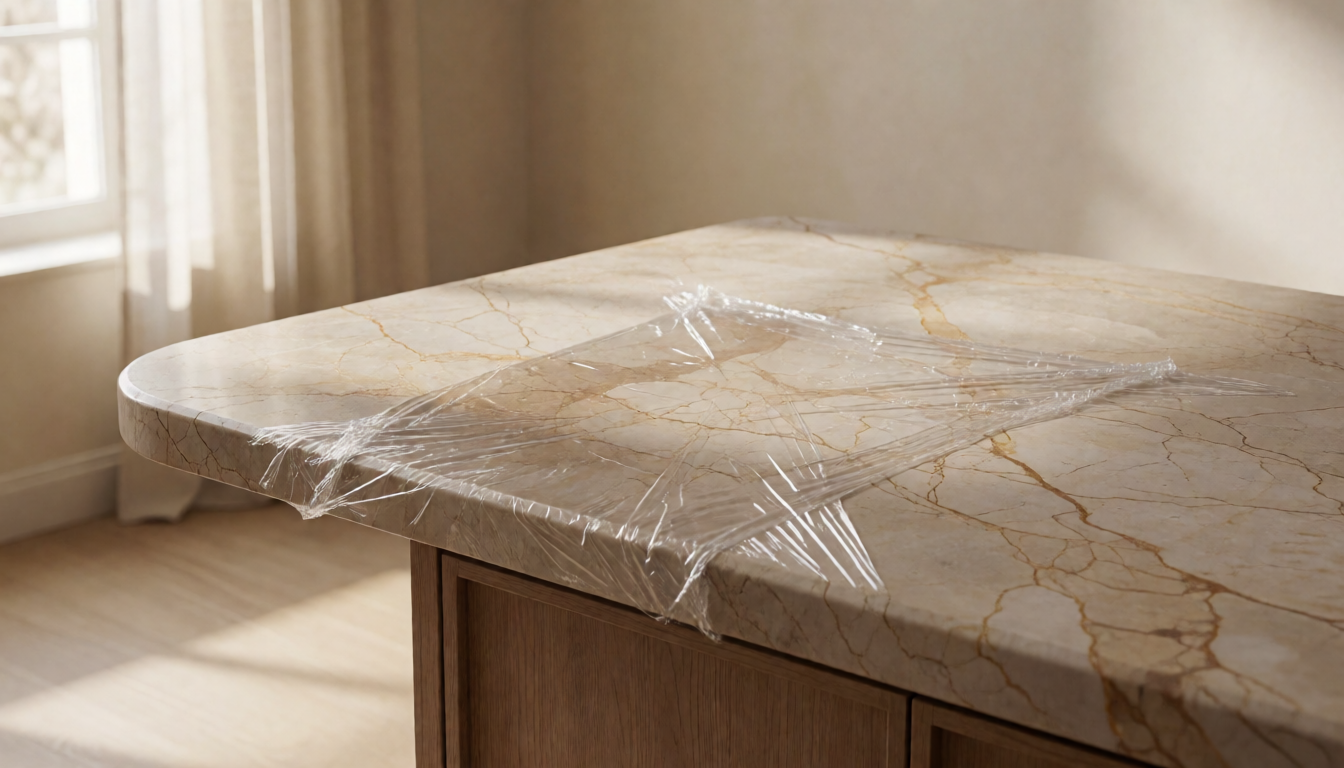
- Apply and cover: Spread 6–12 mm thick over the stain, cover with plastic wrap, tape edges, and poke a few pinholes.
- Wait and scrape: Let dry fully (24–48 hrs), then scrape off, rinse with distilled water, and reseal the area once dry.
Frequently Asked Questions
How many poultice applications does a deep stain need?
Most stains clear in 1–3 applications. Old oil stains soaked deep into travertine may need 4–5. Patience beats scraping—let each layer fully dry before reassessing.
Will a poultice damage my marble?
No, if you use a stone-safe solvent and reseal after. The only risk is using acid on calcareous stone or bleach on rust, which sets the stain. Follow the chart and you are safe.
Can I prevent stains instead of removing them?
Yes. A quality penetrating fluoropolymer sealer prevents 90% of stains by stopping liquids reaching the pore. Reseal calcareous stone every 12–18 months and wipe spills within minutes.
Should I hire a pro or DIY?
DIY poultice kits ($35–$60) handle most home stains under 6 inches. For large or valuable installations—bookmatched marble foyers, onyx bars—hire a stone restorer to avoid uneven results.
Glady Stone: Stone Stain-Removal Kits for 2026
Glady Stone’s 2026 maintenance kit includes a stain-identification chart, five solvent-matched poultice powders, pH-neutral cleaner, and a fluoropolymer resealer. It covers oil, organic, rust, and ink stains on every stone type we sell. Shop Glady Stone’s natural stone stain-removal kit and resolve stains confidently instead of replacing costly stone.