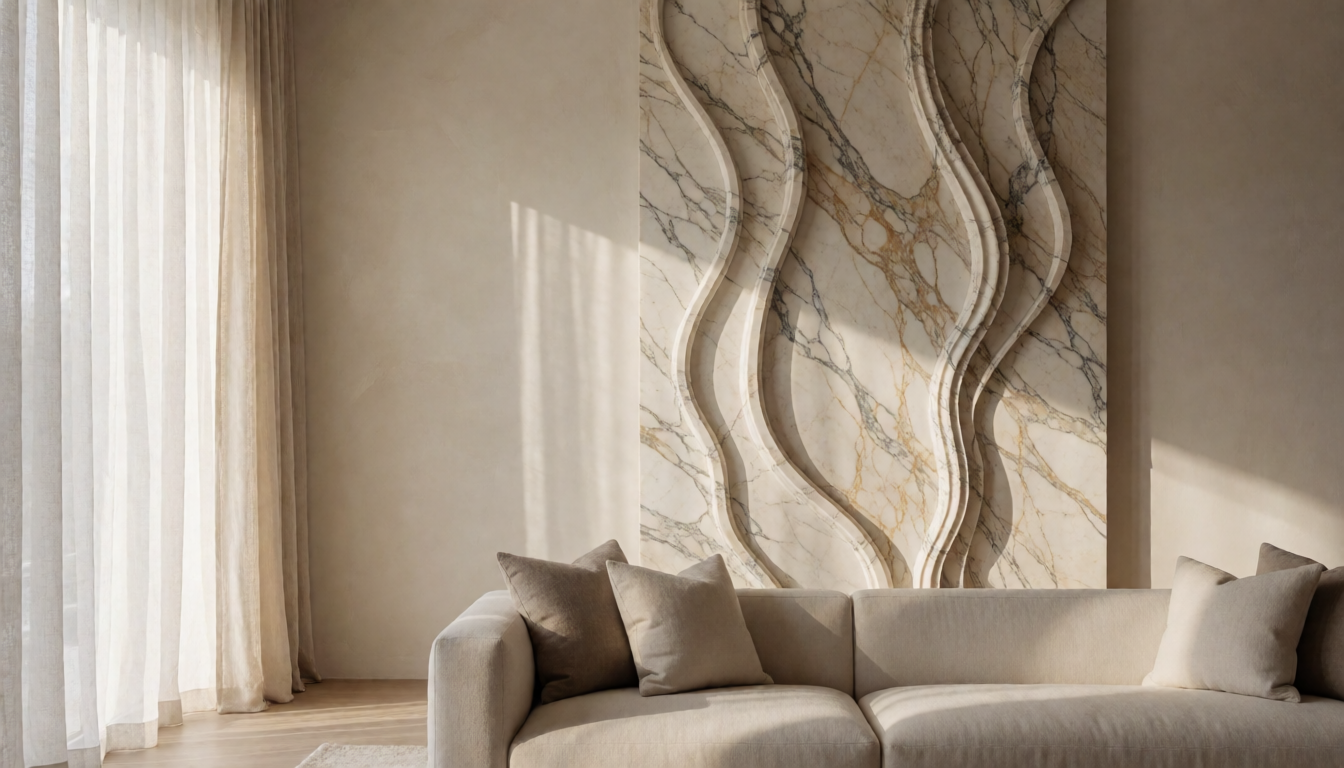
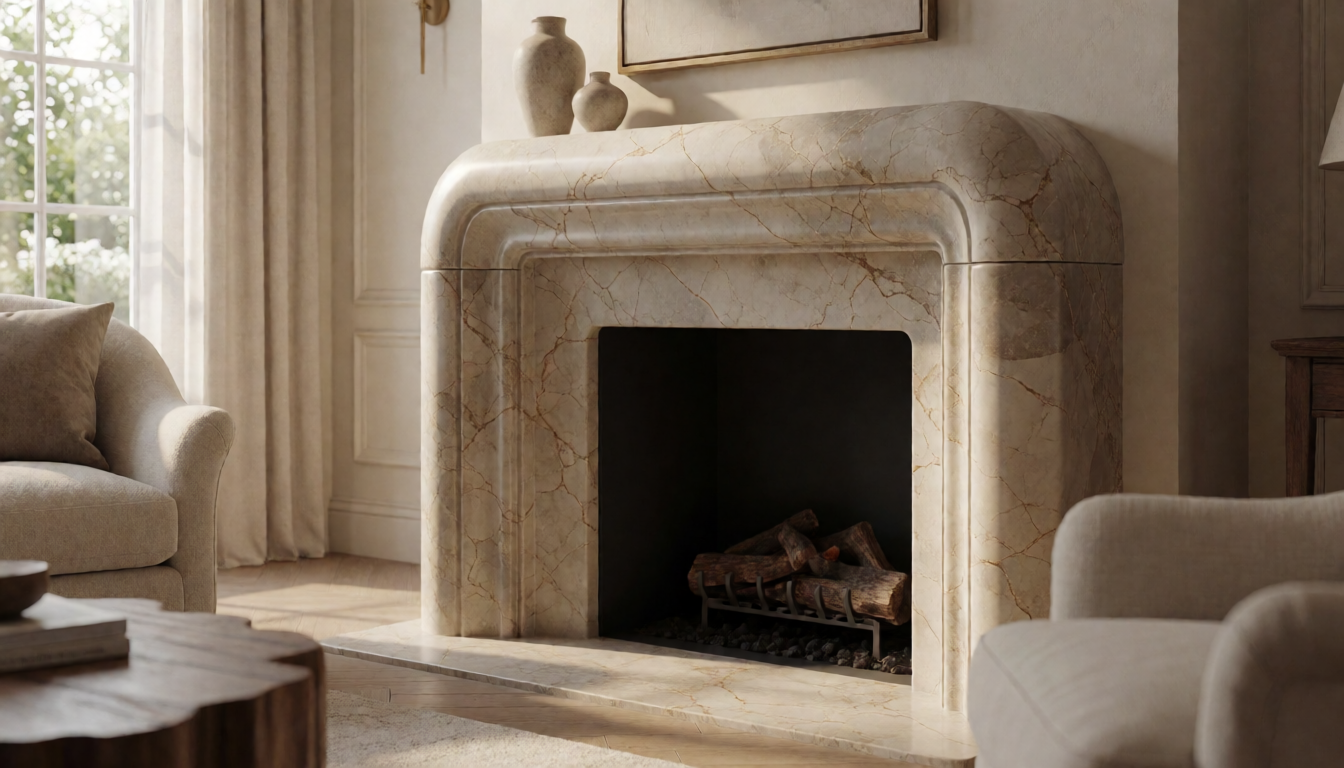
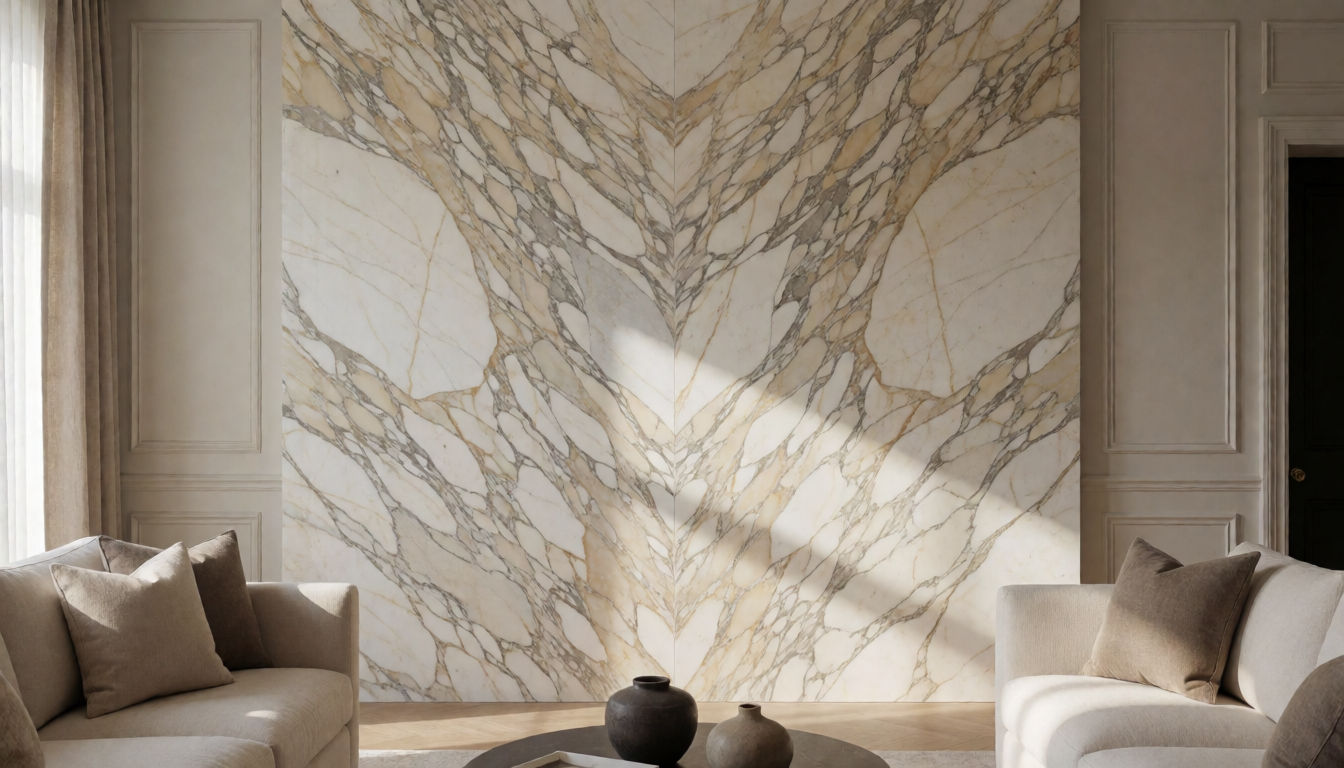
Marble accent walls and natural stone fireplaces are interior architectural features where a single wall surface or fireplace surround is clad in natural stone—typically marble, limestone, or quartzite. In 2026, they are the fastest-growing luxury home decor specification because they create an immediate focal point with permanence and natural beauty that paint, wallpaper, or engineered panels cannot match, while adding measurable real estate value to high-end properties.
What Is a Marble Accent Wall?
A marble accent wall is a wall surface—typically behind a sofa, bed headboard, or fireplace—clad in natural stone slabs or tiles. Unlike full stone-drenching (which covers all walls), an accent wall uses stone as a focal feature against contrasting surfaces (painted drywall, wood paneling). For interior designers and architects, accent walls offer a lower-cost entry point into natural stone specification: a typical marble accent wall costs $2,500–$8,000 installed (for a 12×9 ft wall), vs. $15,000–$40,000 for a full stone-drenched room. The visual impact, however, is disproportionate to the cost—a single well-executed marble accent wall can define the entire character of a room. In 2026, bookmatched marble accent walls (where two adjacent slabs are mirrored to create a symmetrical pattern) are the most-specified luxury living room feature in new high-end residential developments in New York, London, and Dubai.
Why Are Stone Fireplaces Trending in 2026?
- Return to the Hearth: Post-2025 interior design data from Goldara Interiors shows a 45% increase in fireplace specification in luxury home designs compared to 2022. Stone fireplaces are the primary driver: they combine functional heating with sculptural architectural presence.
- Large-Format Slab Capability: In 2026, more fabricators have 5-axis CNC capability to produce seamless curved fireplace surrounds from a single marble block. This technical advancement has expanded the design vocabulary for stone fireplaces beyond simple rectangular surrounds.
- Thermal Mass Benefit: Natural stone has high thermal mass—it absorbs and slowly releases heat. In well-designed homes with efficient inserts, a stone fireplace continues radiating warmth for hours after the fire is out, improving energy efficiency.
How to Specify Marble Accent Walls and Fireplaces for 2026 Projects
| Application | Best Stone Type | Finish | Installation Complexity | 2026 Cost Range (USD) |
|---|---|---|---|---|
| Living Room Accent Wall | Calacatta, Statuario | Polished or Honed | Moderate (bookmatching) | $3,500–$9,000 |
| Bedroom Headboard Wall | Warm limestone, travertine | Honed (matte) | Low–Moderate | $2,500–$6,000 |
| Fireplace Surround | Quartzite, granite | Polished or Leathered | High (heat clearance) | $4,000–$12,000 |
| Entry Hall Feature Wall | Black marble (Nero Marquina) | Polished | Moderate | $3,000–$7,500 |
What Are the Design Rules for Stone Accent Walls in 2026?
- One Statement Wall Per Room: Avoid cladding more than one wall in stone within the same space—it overwhelms the room and diminishes the accent effect. The remaining walls should be a complementary neutral (warm white, soft gray) to let the stone be the focal point.
- Lighting Integration: Specify LED strip lighting in a recessed cove above or below the stone wall. Grazing light across honed stone surfaces accentuates the natural texture. For polished stone, avoid direct downlighting which creates glare; use indirect ambient lighting instead.
- Scale Matching: Larger rooms can carry bolder, higher-contrast stones (Calacatta Gold, dramatic Portugalo). Smaller rooms benefit from lighter, lower-contrast stones (Carrara, light limestone) to avoid visually shrinking the space.
Frequently Asked Questions
Do marble accent walls require sealing?
Yes. Even vertical wall surfaces are exposed to indoor humidity, cooking odors (in open-plan spaces), and occasional contact. Seal marble accent walls at installation and every 2–3 years thereafter. Fireplace surrounds require more frequent sealing (annually) due to heat cycling, which can accelerate sealer breakdown.
Can I install a marble accent wall myself?
For small areas (under 40 sqft), experienced DIYers can install marble tile accent walls using proper stone adhesive and spacers. For large-format slab accent walls, professional installation is strongly recommended: marble slabs are extremely heavy and brittle, requiring specialized lifting equipment and substrate preparation to avoid cracking or debonding.
Does a stone fireplace get too hot to touch?
With a properly installed insert or gas fireplace, the stone surround temperature stays within safe limits (typically 120–150°F / 49–65°C at the surface). However, the stone does radiate heat effectively, which is desirable. Specify a non-combustible clearance zone of at least 12″ around the firebox opening, per local building codes and the fireplace manufacturer’s specifications.
Are marble accent walls outdated in 2026?
No—they have evolved. The dated “entire foyer clad in matching green marble” look of the 1980s has been replaced by selective, high-contrast accent applications with bookmatched veining as the centerpiece. When done with a single, high-quality stone variety and modern lighting, marble accent walls are among the most contemporary luxury interior features specified in 2026.
Glady Stone: Natural Stone for Architectural Interiors
Glady Stone supplies architects, interior designers, and luxury homeowners with premium natural marble, quartzite, and limestone slabs for accent walls, fireplace surrounds, and feature installations. Technical support includes slab selection guidance, bookmatching layout planning, and fabricator referrals for US and European project locations.
Explore natural stone options for your next interior project at the Glady Stone architectural stone collection.