Choosing a marble basin or tub involves more than just aesthetics; it requires structural calculation. As a B2B buyer sourcing stone furniture from China, you must understand the physical demands placed on your building’s foundation. A standard acrylic tub weighs roughly 30–50 kg (66–110 lbs). In contrast, a thick slab marble bathtub can easily exceed 800 kg to over 1 ton depending on dimensions and thickness. Ignoring this difference leads to cracked floors in residential properties or expensive retrofitting for hotel renovations. This guide breaks down the specific metrics you need to verify with your supplier before placing an order for wholesale projects.
Calculating Total Load: Water, Stone, and User Weight
When assessing a marble bathtub weight, do not look only at the dry stone mass. The total load is the sum of three components: the empty tub, the water inside, and the user standing within it. Most luxury marble slabs used for sinks or tubs range from 2 cm to 3 cm in thickness. However, hotel-grade pieces often use thicker cuts (4–6 cm) to prevent cracking during transport, significantly increasing weight.
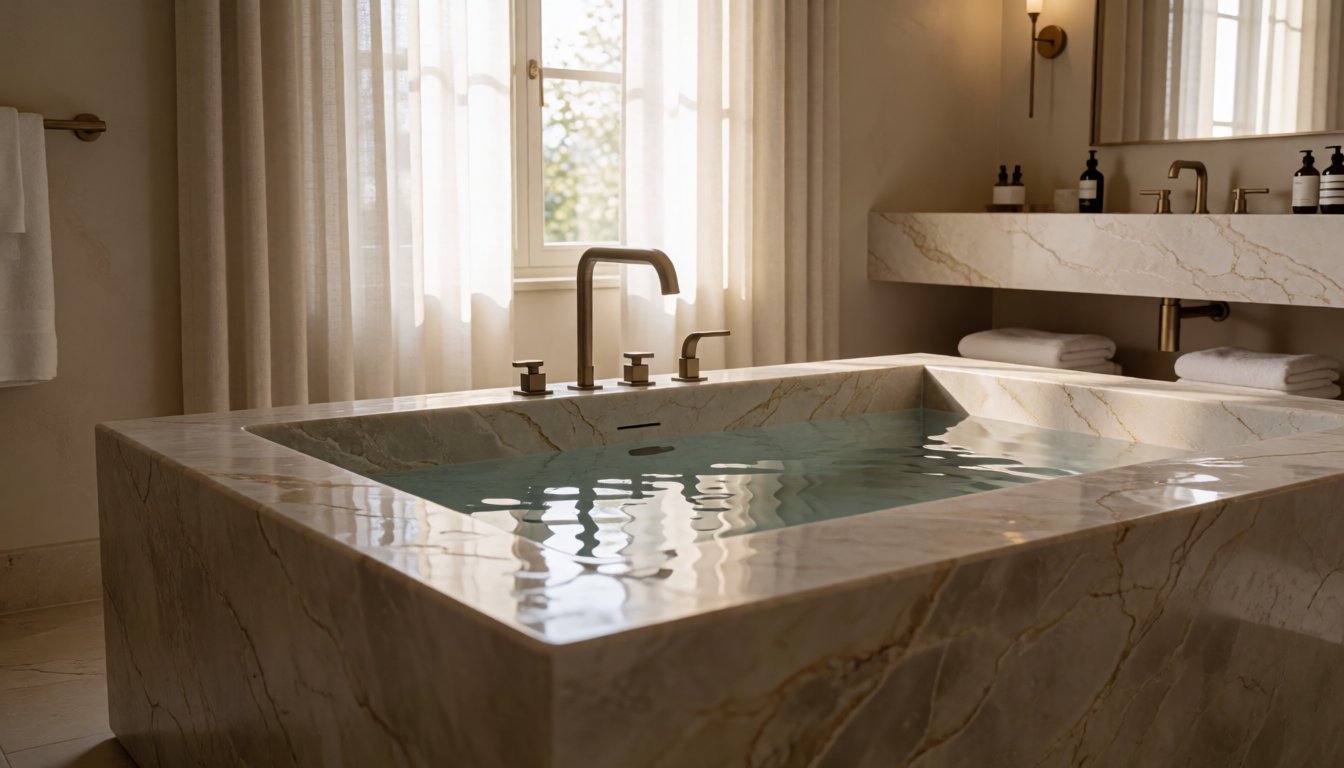
Consider a standard rectangular stone tub measuring 180 x 90 cm with an average depth of 50 cm.
* Empty Tub: A solid marble slab of this size typically weighs between 300 kg and 450 kg (660–990 lbs). If the piece includes a built-in seat or complex basin geometry, add another 10% to 20%.
* Water Load: Water density is approximately 1 kg per liter. A tub holding roughly 300 liters of water adds 300 kg (660 lbs) instantly upon filling.
* User Weight: Add the weight of one or two adults, estimated at 80–90 kg each, plus their movement dynamics.
The dynamic load occurs when a person stands up inside the tub. The force exerted on the floor spikes momentarily as they shift position. For high-end residential clients with thin marble floors (often ceramic tile over concrete), this spike can cause hairline fractures if not supported by adequate substructure. Always request weight specifications in both kilograms and pounds from your supplier, specifically asking for the “tare weight” of the dry unit versus the estimated filled weight.
Structural Requirements: Concrete Slabs vs. Wooden Framing
The installation method depends entirely on how much load the existing floor can bear. Standard residential concrete slabs usually support a live load capacity of 40–50 kg per square meter (approx. 8–10 psf). A stone tub concentrated over an area smaller than its full footprint creates intense point loading that often exceeds these limits without reinforcement.
For stone tub installation in new construction or major renovations, you generally need a reinforced concrete pad.
* Minimum Slab Thickness: Ideally 15 cm (6 inches) of high-grade structural concrete with rebar mesh underneath the specific load zone.
* Load Distribution: The weight must be spread across at least three corners using steel beams or additional framing if pouring new concrete is not feasible.
In hotel projects where you are replacing an old tub, check the existing floor plan carefully. Many older structures have wood subfloors that cannot support even 20% of a heavy marble unit’s mass in isolation. If the client wants to install a marble bathtub on a mezzanine or second story without modifying the main foundation, you must engineer steel I-beams underneath the installation zone. These beams transfer weight directly to load-bearing walls rather than relying solely on floor joists. Never accept an order for heavy stone fixtures if the buyer cannot provide proof of structural assessment from a civil engineer licensed in their region.
Installation Logistics and Hidden Site Costs
Beyond the static weight, you must account for logistics during bathtub floor loading. Moving a 100 kg dry unit is one thing; maneuvering an assembled marble basin into place is another. The center of gravity shifts once water fills the cavity or if internal shelving is installed before delivery.
Suppliers often overlook transport damage risks associated with heavy loads on narrow stairwells. A typical shipping container allows for stacking, but you cannot stack stone tubs vertically without significant padding and bracing to prevent edge chipping during transit. When calculating landed cost (CIF), factor in:
* Crew Size: You will need at least 4–6 strong laborers with proper lifting equipment to safely position a heavy unit on the first try. One dropped stone tub is total loss, not repairable.
* Rental Costs: If your site has no elevator or freight lift, you may need to rent hydraulic jacks and temporary shoring for 2–3 days while waiting for the delivery window.
* Demolition Fees: Removing an old heavy tub requires specialized breakers that can damage surrounding tile work if not handled by experts.
Ask your supplier about packaging standards specifically designed for weight distribution during sea freight. Standard wooden crates are often insufficient for units over 800 kg; request reinforced steel corner protectors and vibration-dampening foam to prevent cracking due to ship motion. Also, clarify whether the price includes the installation kit or if you must source local plumbing adapters separately.
Sourcing Advice: What to Ask Your Supplier Before Ordering
When dealing with a factory like Gladystone for wholesale or dropshipping, precise communication prevents costly delays. Do not assume all “marble bathtubs” are created equal regarding structural integrity. Some suppliers sell hollow-core designs that save weight but may flex under pressure; others offer fully solid slabs guaranteed to be rigid up to 10 mm thickness variations.
Key questions to ask your manufacturer before finalizing a bulk order:
* Material Density: What is the specific gravity of the stone batch? Does it include heavy veins (calcite) that increase density beyond standard marble averages?
* Reinforcement Options: Can you machine internal steel rods or carbon fiber inserts into thicker slabs to reduce cracking risk without adding excessive weight? This adds 5–10 kg but significantly improves floor loading safety.
* Installation Manuals: Do you provide a structural calculation sheet for the specific dimensions ordered, showing estimated filled weight and recommended subfloor thickness based on local building codes (US/UK/EU)?
* Warranty Terms regarding Load Failure: Does your warranty cover cracks caused by insufficient floor support? Usually, manufacturers exclude liability if the installation site does not meet minimum load-bearing standards.
Understanding these variables ensures you sell a premium product without triggering structural liabilities later. By specifying realistic weight classes and demanding proper subfloor guidelines from Chinese factories, you protect both your reputation as an importer and the safety of end-users in their homes or hotels.