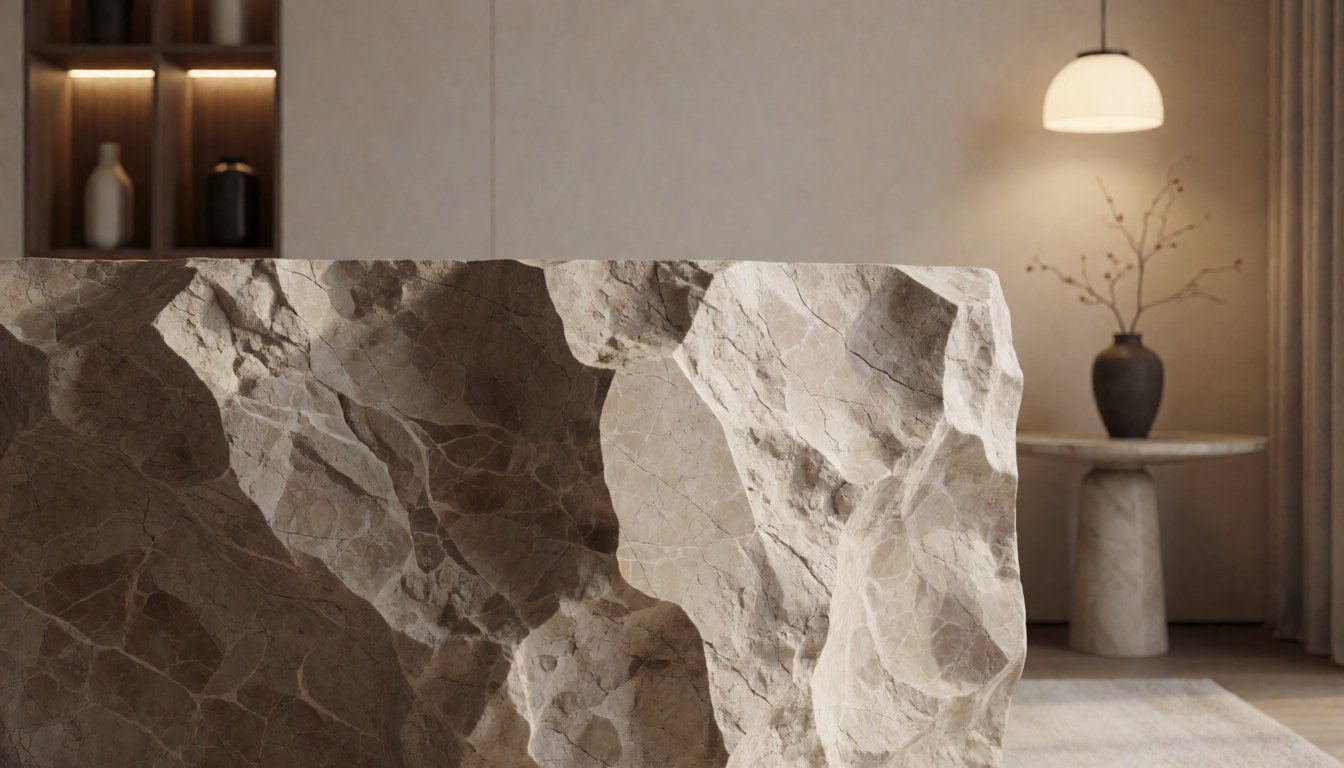
The visual impact of your dining table depends heavily on one specific dimension often overlooked in initial specs: marble slab thickness. As an importer sourcing for the US or EU market, selecting between a standard 2cm (roughly 0.8 inches) stone tabletop versus a robust 3cm (1.2 inches) option fundamentally alters your product’s aesthetic profile, shipping logistics, and final landed cost. While thin slabs offer a lighter footprint suitable for modern designs, thicker options convey luxury but require different handling protocols at the factory in China. Understanding how marble table thickness influences structural integrity and pricing allows you to make precise decisions when negotiating with suppliers like Gladystone.
Visual Depth vs. Modern Minimalism
The primary difference between 2cm and 3cm stone is immediate upon delivery. A standard marble slab thickness of 20mm creates a delicate, floating appearance that pairs well with high-leg tables or designs featuring visible joinery underneath the top edge. This profile works exceptionally well for contemporary interiors where lightness is prioritized over heft. However, this slim look comes with trade-offs regarding durability perception and edge finishing capabilities.
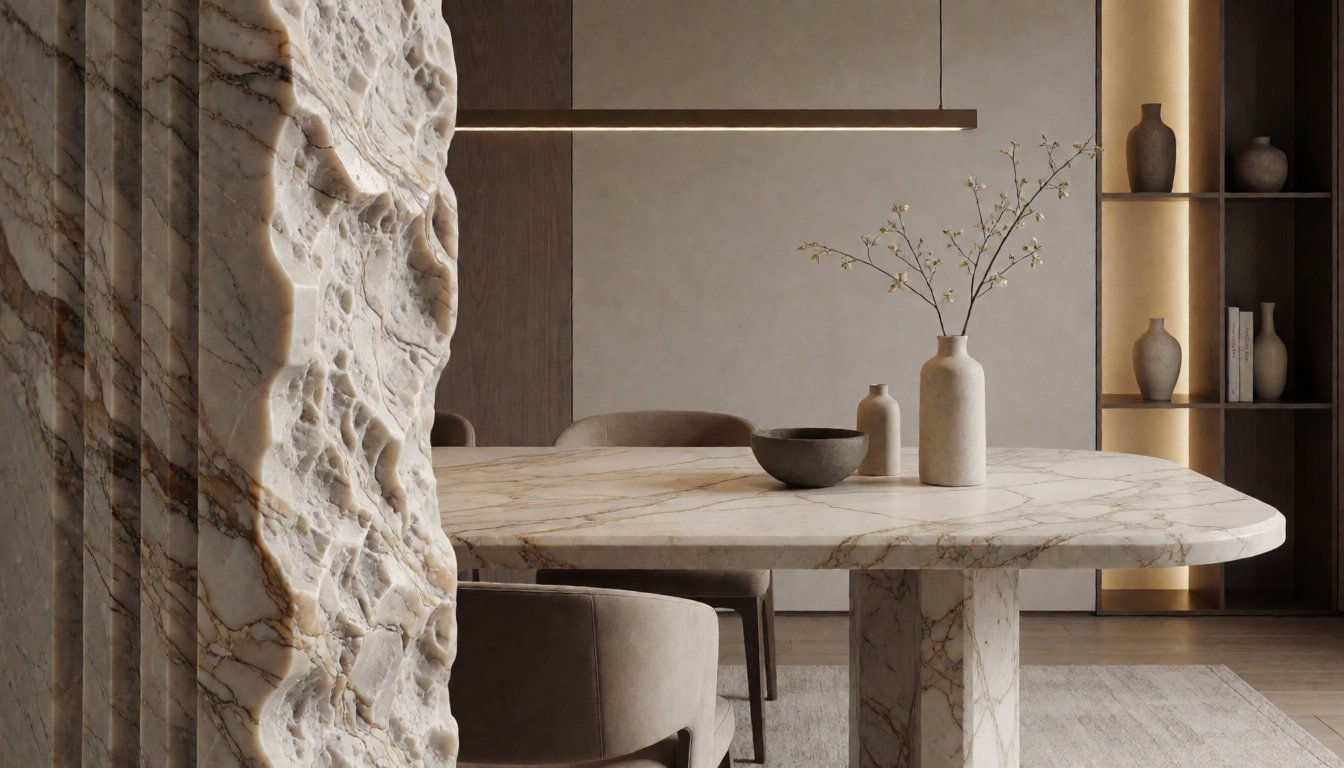
In contrast, a stone table top thickness of 30mm provides substantial visual weight. When polished or honed to reveal the natural clefts of Calacatta Gold or Statuario, thicker stone projects an aura of permanence and high-end craftsmanship. This is particularly critical for large dining tables intended to anchor a room. The sheer mass prevents the table from appearing “cheap” even if using veins with higher iron content that can sometimes make thinner slabs look unstable visually. For wholesalers targeting mid-to-high-tier retailers, offering both options allows clients to mix and match based on their specific interior design briefs without compromising brand positioning.
Structural Weight and Shipping Logistics
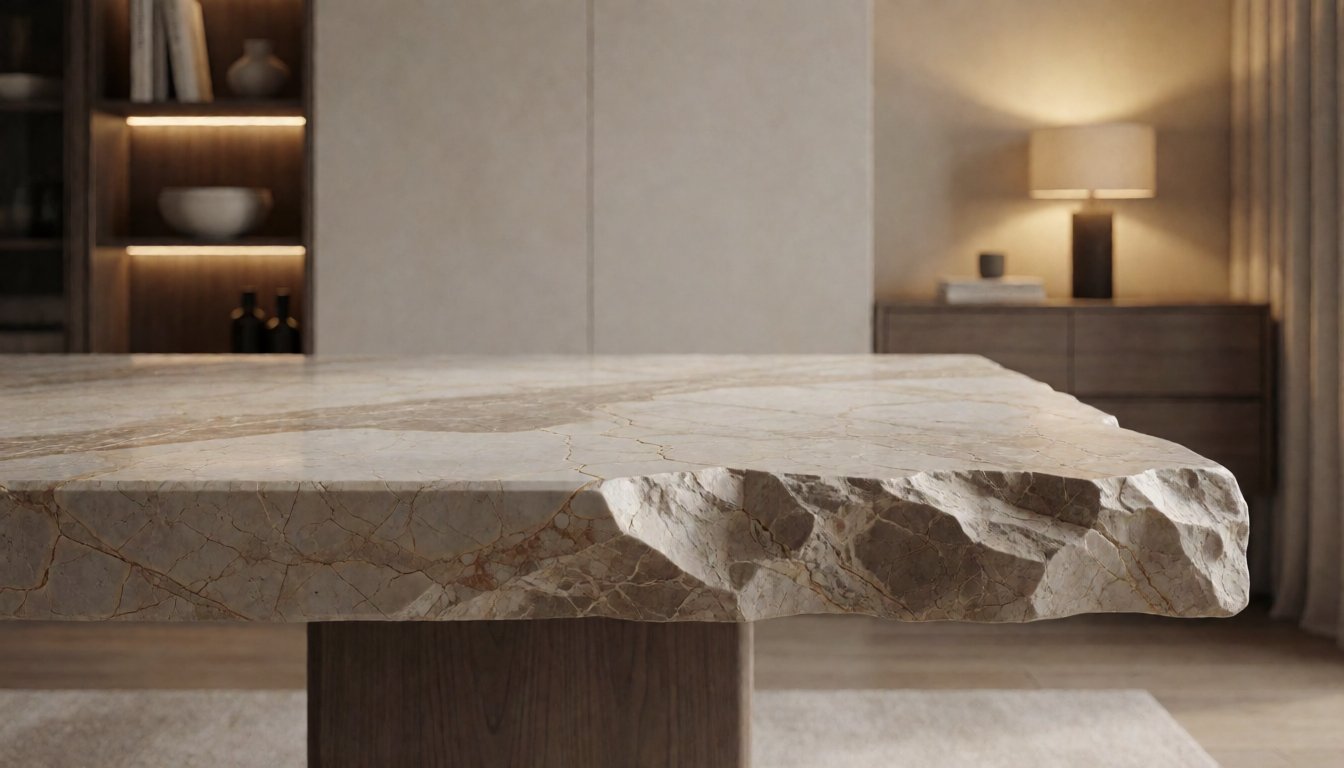
The most critical metric for an importer is the weight increase per square meter when switching from 2cm to 3cm thickness. A standard slab measuring roughly 160 x 80 cm (approx. 5ft 3in x 2ft 7in) typically weighs around 45 kg at 2cm thick. Increasing that dimension by just one centimeter adds approximately 9–10 kg per piece, bringing the total to roughly 55 kg for a similar size slab.
This seemingly small difference compounds quickly when scaling orders. A standard container load of dining tables might shift from being manageable with standard fork-lift trucks at 2cm thickness to requiring specialized rigging or lower stacking heights at 3cm. For dropshippers calculating landed costs, this weight variance directly impacts ocean freight pricing tiers and insurance premiums for high-value cargo.
Furthermore, thicker stone reduces the risk of micro-cracks during transit from China to your warehouse in Europe or America. Thinner slabs are more susceptible to flexing if not perfectly supported by packaging materials like foam inserts or honeycomb cardboard. When sourcing marble table thickness options, always specify that suppliers must reinforce 3cm edges with additional support blocks inside the carton to prevent bowing during long sea voyages.
Manufacturing Costs and Pricing Margins
The cost premium for thicker stone is not linear but rather jumps significantly due to raw material scarcity and processing complexity. In China, high-quality Carrara or Calacatta marble slabs are often sold by weight or square meter based on thickness availability. A 3cm slab consumes more of the original quarry block than a 2cm cut, meaning less usable stone remains for other orders. Consequently, factory pricing typically adds roughly $15–$25 USD per linear foot just to cover material yield loss alone before polishing begins.
When negotiating with manufacturers like Gladystone, expect the base price difference between your two main SKUs (stock keeping units) to range from 30% to 45%. If a standard dining table top in 2cm costs roughly $80–$120 USD depending on rarity and finish, moving to 3cm can push that unit cost toward $160–$220 USD before you add labor for edge profiling.
However, the perceived value increase often justifies this margin hike for premium brands. Buyers are willing to pay extra for a table top that feels solid underfoot and offers better resistance against heavy impacts like dropping plates or leaning chairs. Always request detailed breakdowns including material costs versus polishing labor when asking for quotes on stone table top thickness variations, as some factories may inflate the “thickness fee” while cutting corners elsewhere in quality control.
Edge Profiles and Customization Capabilities
The finishing capabilities of your supplier also depend heavily on selected marble slab thickness. Standard edge profiles like bullnose or ogee can be machined easily on both 2cm and 3cm slabs without significant difficulty. However, more complex customizations become challenging at lower thicknesses. For instance, creating a waterfall effect where the tabletop extends down to meet legs requires precise calculations; doing this with only 20mm of material leaves very little room for error if the cut is too deep or uneven.
For projects requiring double-lap edges (where two pieces are glued together to create an illusion of greater depth), 3cm thickness provides a much safer margin. This technique allows you to achieve a visual appearance closer to 4cm without incurring the full raw material cost and weight penalty associated with quarrying such massive blocks from Italy or Brazil.
When building your product line, consider offering rounded corners on thinner slabs for safety compliance in European markets (EN standards), while reserving sharp miters for thicker versions aimed at luxury US clients who prioritize aesthetic precision over child-safety concerns. Clarify these edge requirements early to avoid costly rework fees upon arrival of the container shipment.