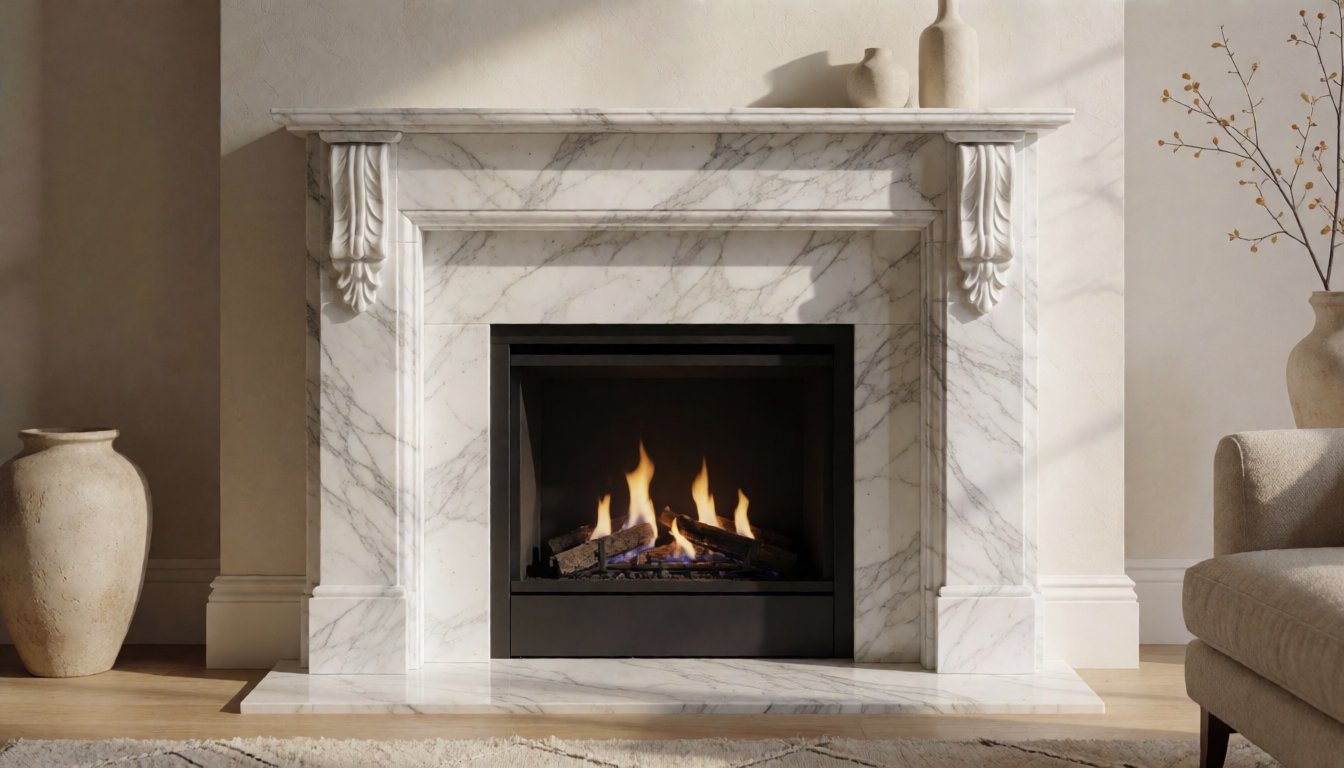
Importers sourcing natural stone for US or EU markets often face one critical barrier before listing marble fireplace surrounds on their Shopify stores: heat resistance concerns. Retail customers frequently ask, “Will this crack if the fire gets too hot?” As a buyer evaluating a supplier like Gladystone, you must separate marketing claims from geological reality to avoid returns and liability issues. This guide breaks down the technical facts regarding marble heat resistance and stone fire safety, providing concrete data on specifications that matter for white-label brands and dropshippers.
Understanding Marble’s Thermal Limits
Marble is a metamorphic rock composed primarily of calcite, making it chemically distinct from granite or quartzite. When assessing marble fireplace surround durability, you must understand its thermal conductivity versus heat retention. Unlike steel which conducts heat instantly, stone acts as an insulator but has a lower melting point than metals used in gas logs.
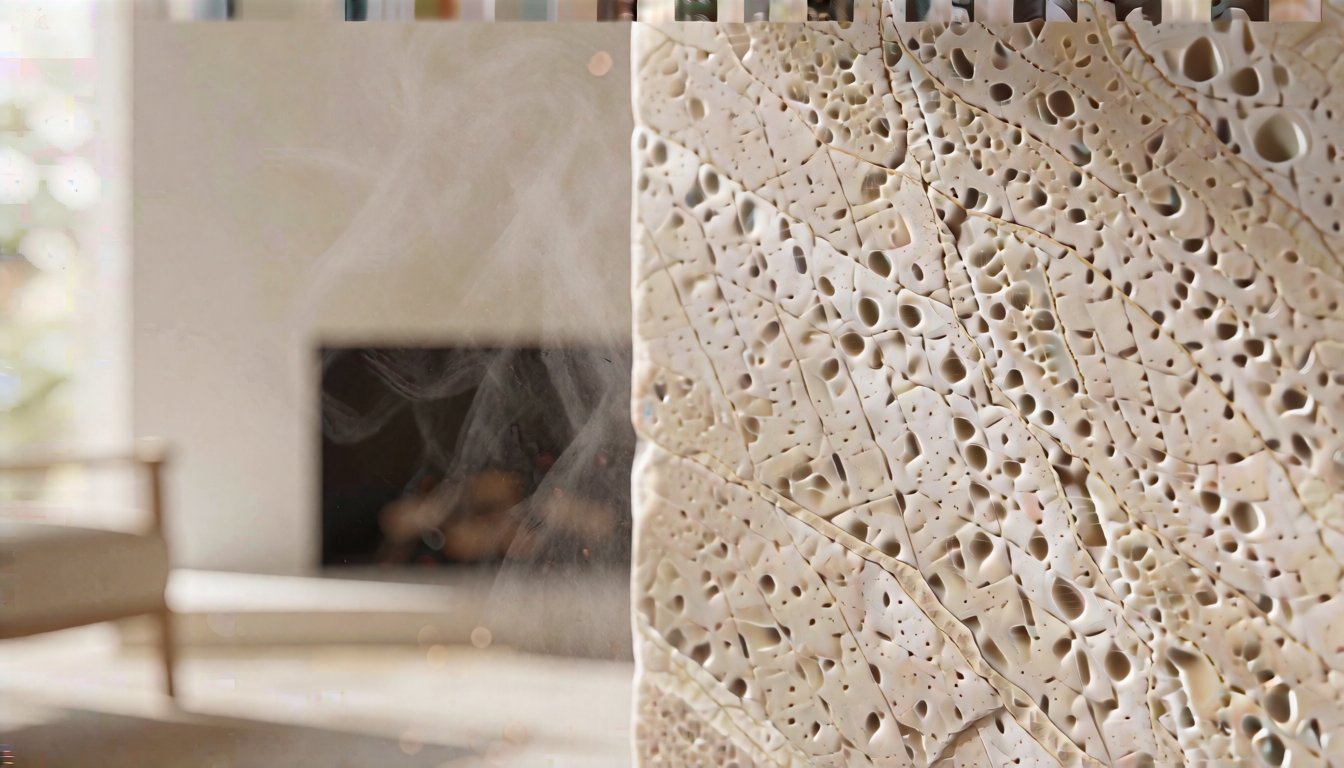
The critical metric here is the temperature threshold where calcite begins to degrade structurally or chemically. Pure marble generally withstands temperatures up to roughly 800°C (1472°F) without immediate structural failure, though discoloration can occur well before that point. However, a fireplace surround rarely sits in direct flame for extended periods unless it is an open wood-burning setup with specific clearance distances maintained.
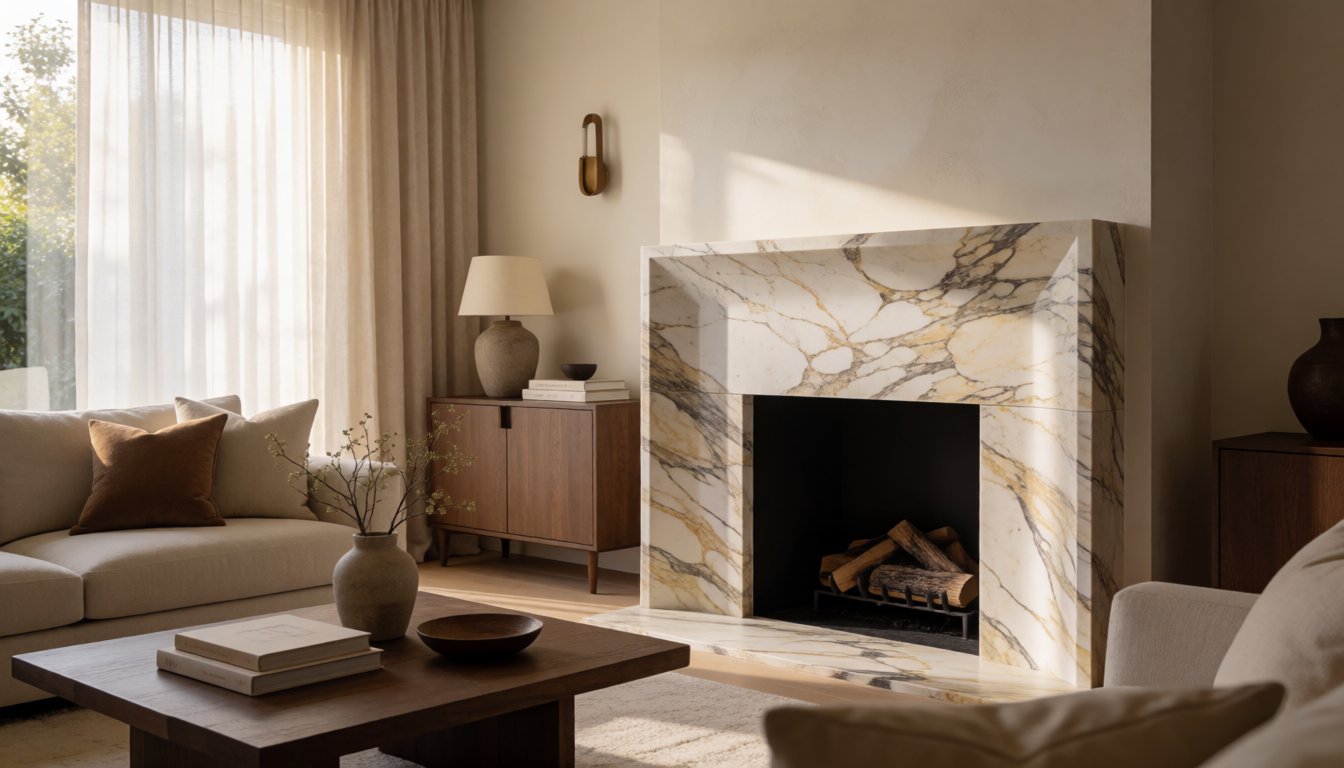
For B2B buyers, the real risk isn’t melting but thermal shock—sudden temperature changes causing internal stress cracks. Gladystone’s production process involves kiln-firing slabs at roughly 1050°C to strengthen them before cutting and polishing. This pre-treatment significantly improves stone fire safety compared to raw quarry blocks. However, the finish matters more than you might think. A high-gloss polished surface reflects heat but hides micro-cracks better than a rough-hewn texture, which can trap soot and expand unevenly when heated.
The Myth of “Flame-Proof” Stone
You will often see suppliers claiming their stone is “flame-proof.” In an industrial context, this is misleading terminology that can lead to legal trouble if a customer burns it down due to misinformation. No natural stone is truly immune to extreme heat in every scenario; the goal is fire safety within normal residential usage parameters.
When evaluating supplier specifications for your white-label line, ask about the minimum safe distance from an active fire source. Standard installation guidelines typically require at least 30cm (12 inches) of clearance between open flames and any combustible material or stone surface directly exposed to radiation heat. For a standard gas fireplace unit measuring roughly 60cm in width, this usually means installing the surround so that only the lower edge faces direct upward convection currents from the burner box.
If you are sourcing for wood-burning inserts where logs can pop and sparks fly, ensure your supplier confirms their marble fireplace surround has been tested against flying embers. While stone won’t ignite like drywall or plywood, an ember landing on a cold slab creates intense localized heat transfer. If the marble is thin (less than 2cm), this spot could develop a thermal fracture over time even if no fire started nearby. Most reputable factories in China supply slabs with a minimum thickness of 18mm to 20mm for fireplace applications specifically to mitigate this risk, adding roughly 4-6kg per square meter compared to standard vanity top thicknesses.
Installation Variables That Affect Safety Performance
The safety profile of your product depends heavily on how you instruct retailers and installers. As a manufacturer partner, Gladystone provides detailed installation manuals that outline specific jointing techniques for fire-prone areas. The type of adhesive used behind the surround is often more dangerous than the stone itself if it contains organic binders not rated for high heat.
For exterior or semi-exterior installations where moisture and freeze-thaw cycles combine with sun exposure, standard marble becomes brittle faster than in interior environments. In these cases, specify a minimum slab size of 120cm x 60cm rather than large monolithic sheets to reduce the risk of thermal expansion cracking during winter months when cold air hits heated stones near fireplaces indirectly through windows or vents.
Lead times for custom fireplace slabs are roughly 45-60 days depending on stone availability, whereas standard inventory can ship within 10-14 days. If a retailer orders a specific rare color like “Statuario,” you must verify if that quarry block was pre-finished with heat-resistant sealers or polished in-house immediately after cutting to ensure consistent thermal properties across the batch.
Cost Implications of High-Quality Heat Treatments
Does upgrading from standard commercial stone to premium fire-rated marble add significant costs? Roughly speaking, slabs marketed specifically for fireplace use command a 15-20% price premium over general-purpose bathroom or kitchen tops due to stricter quality control and thickness requirements. This cost is reflected in the raw material sourcing where quarries extract thicker blocks intended for hearth applications rather than thin vanity cuts.
When calculating your landed costs, factor in that heavier fireplace slabs (often exceeding 15kg per square meter) require specialized logistics handling compared to lighter countertop pieces roughly half the weight. Shipping a single large slab can cost $80-$120 via air freight depending on dimensions versus standard crate rates for smaller vanities and tables.
To protect your margins while offering genuine stone fire safety, consider bundling pre-cut fireplace kits with clear installation guides that emphasize clearance zones rather than trying to sell the “unbreakable” attribute as a marketing hook. Retailers in Europe often prefer larger format slabs (up to 240cm wide) which reduce grout lines and improve aesthetics, but these require reinforced packaging during transit from China to avoid chipping before they even reach your warehouse for dropshipping fulfillment.
Verifying Supplier Certifications Before Ordering
Before placing a bulk order with Gladystone or any similar factory, request the test reports certifying thermal shock resistance rather than accepting vague verbal assurances about “heat safety.” Look for ISO standards related to dimensional stability under temperature variation. While specific fire-rating certifications are rare in the stone industry outside of Europe’s strict EN 12057 standards (which often apply more to tiles), a reputable supplier will provide lab data showing how their slabs perform after repeated heating cycles up to specified temperatures.
Ask specifically about the resin content if using composite marble or engineered stones, as these materials react differently to heat than pure calcite. Pure natural stone is generally safer for high-heat zones simply because it lacks organic binders that might burn or emit fumes. Ensure your contract specifies a return policy for slabs arriving with pre-existing thermal cracks before installation, which can happen if they were stored improperly during the long lead time from Guangzhou to New York or London ports.
By focusing on these tangible metrics—slab thickness of 18-20mm, minimum clearance distances of 30cm, and verified kiln-treatment—you build a product line that stands up to customer scrutiny without making impossible claims about natural materials.