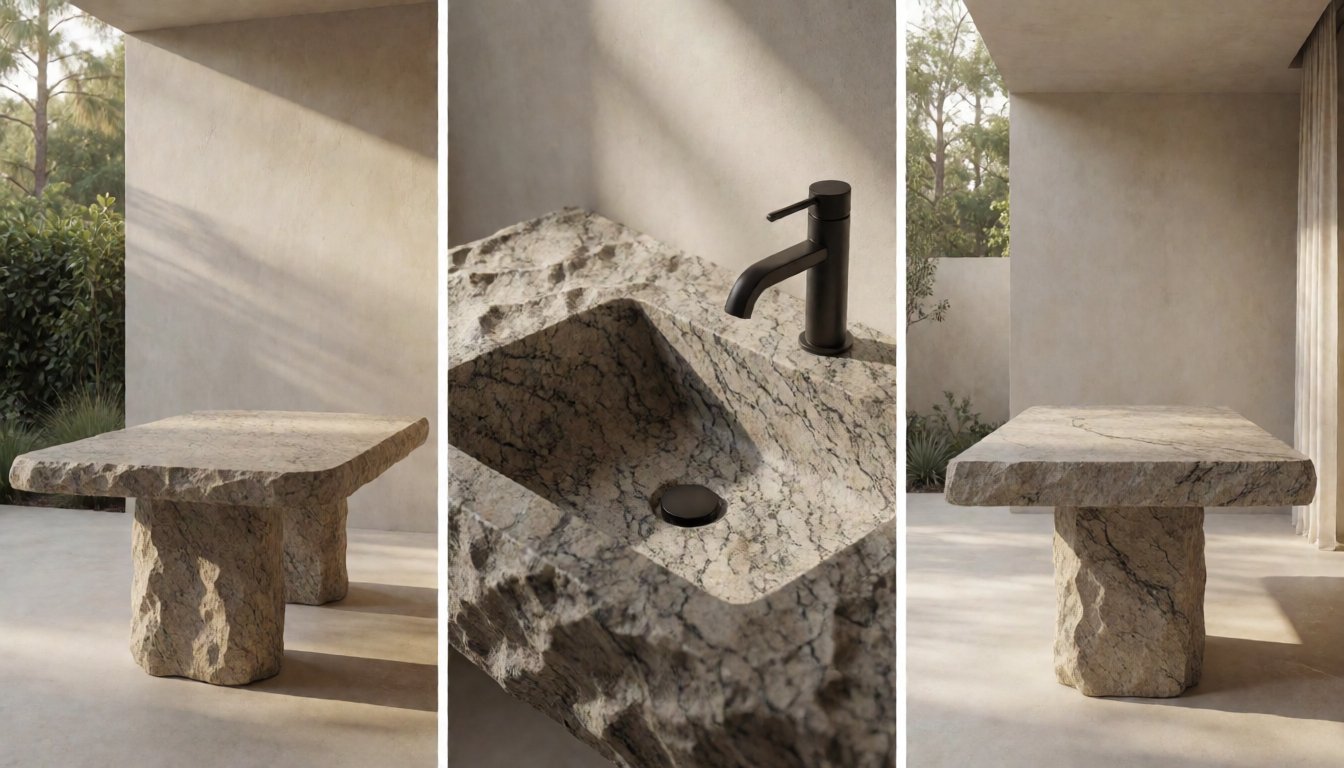
Importers sourcing stone for the US or EU markets face a specific challenge when selling outdoor collections: material durability against local climate conditions. While granite and quartzite are naturally robust, buyers need to understand how frost cycles, intense UV exposure, and freeze-thaw dynamics affect their inventory before it reaches the end consumer. As a manufacturer based in China with decades of experience in natural stone processing, Gladystone has developed specific finishing techniques to enhance the longevity of outdoor sinks, bathtubs, dining tables, and vanities. This guide outlines what to check during quality control and how to manage client expectations regarding weathering performance.
Frost Resistance and Freeze-Thaw Cycles
The most critical factor for outdoor stone furniture is its ability to withstand freeze-thaw cycles without cracking or spalling. When water penetrates the porous structure of a stone slab and freezes, it expands by roughly 9%, generating internal pressure that can fracture the material over time. This risk is highest in regions like the northern US Midwest or Scandinavia but applies globally where winter temperatures drop below zero.
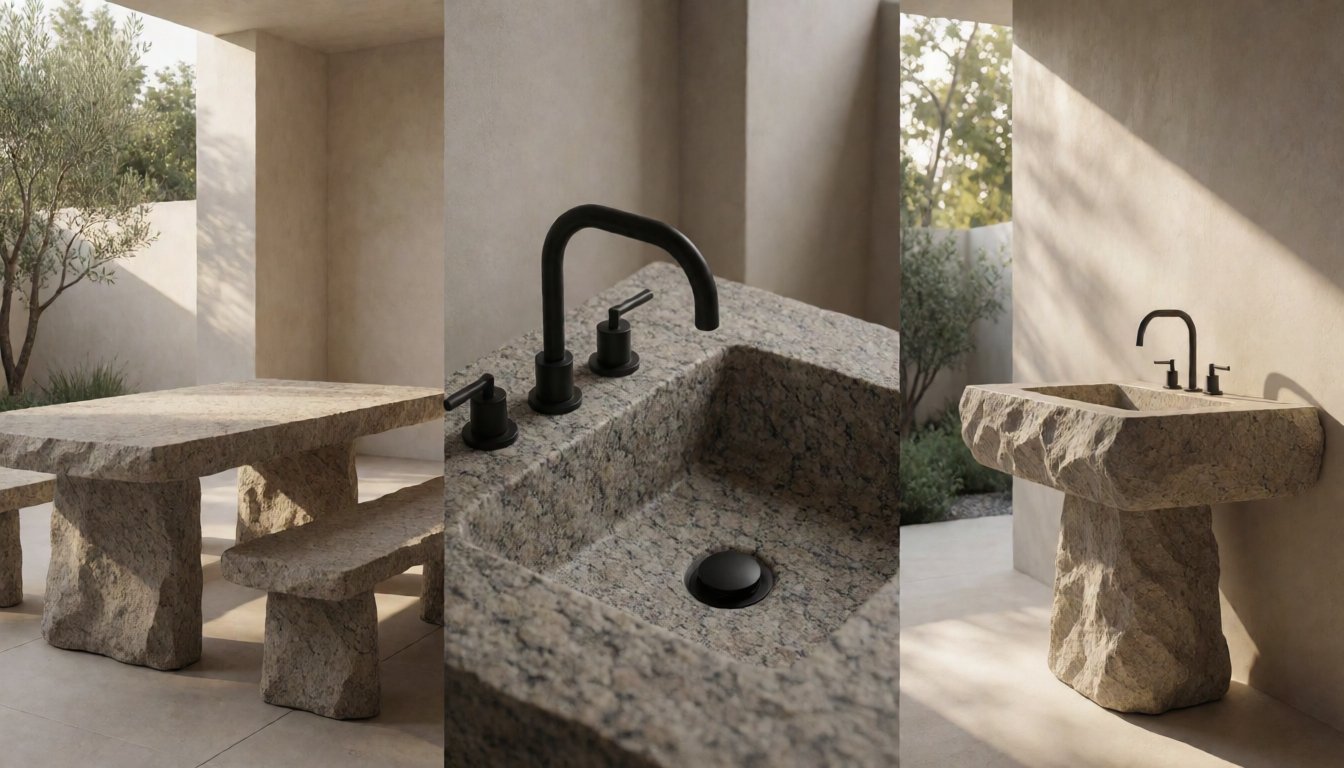
Granite generally offers the best resistance due to its low water absorption rate, typically under 0.5% for commercial-grade outdoor slabs. Marble and limestone are more porous and require specific sealing treatments if used outdoors, though they are often limited to covered patios or mild climates. When evaluating a supplier’s outdoor collection, ask for water absorption test results from ISO 10545 standards. For Gladystone, we process outdoor-grade granite with a density of roughly 2,700 kg/m³, ensuring minimal internal stress during freezing.
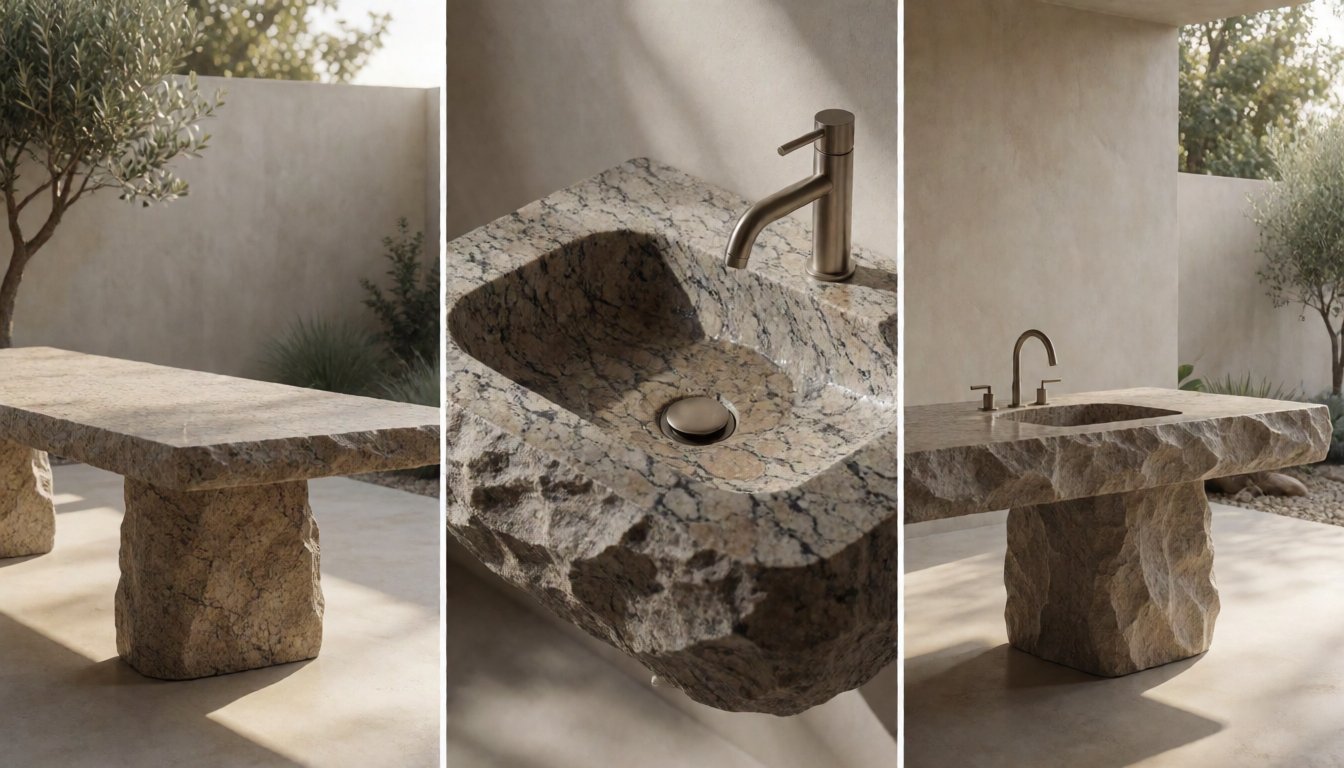
To mitigate frost damage, the finishing method matters significantly. A honed or brushed finish often provides better traction and slightly higher water retention than a high-gloss polish, which can mask micro-cracks. However, if the client requires a polished look, ensure the supplier applies a penetrating sealer that repels water without creating a surface film that traps moisture. For large items like outdoor dining tables, which may weigh between 80 to 150 kg depending on thickness and base design, structural integrity is paramount. A cracked slab in a heavy table compromises safety and liability. Always request samples be stored outdoors or in a freezer chamber prior to bulk production to verify crack-free performance after multiple freeze-thaw cycles.
UV Stability and Color Fading
Ultraviolet radiation is the second major enemy of outdoor stone furniture, particularly for lighter-colored varieties like Carrara marble or Calacatta quartzite. Prolonged exposure can cause calcium carbonate in limestone and marble to darken or discolor, while iron-bearing stones may develop rust stains. Importers often see complaints about “yellowing” or gray patches after six months of sun exposure.
Realistically, no natural stone is completely immune to UV effects, but the rate of degradation varies. Darker granite varieties with high quartz content show negligible fading even under direct sunlight for years. Lighter stones may darken slightly due to mineral reactions rather than actual color loss; this is often reversible with cleaning. Buyers should communicate clearly with their customers that natural stone is a living material that evolves with the environment.
From a manufacturing perspective, the resin content in engineered quartz differs from natural stone, but Gladystone focuses on 100% natural stone for outdoor lines to ensure authentic aging. For white-label brands selling premium decor pieces, specify that UV stability testing should be part of the pre-production sample phase. We recommend limiting outdoor use of very light-colored limestone or marble to areas with partial shade. If a client insists on full sun exposure for these materials, suggest using high-UV-resistant sealers, though effectiveness diminishes over time and requires reapplication every 12 to 18 months.
Maintenance Protocols for End Consumers
Selling outdoor stone furniture involves managing the maintenance expectations of the buyer. Unlike indoor kitchen sinks or bathroom vanities, outdoor pieces require a different care routine. Importers should provide clients with clear instruction cards included in the packaging or on the website. These instructions must specify cleaning agents that are pH-neutral to avoid etching the surface.
Acidic cleaners containing vinegar, lemon juice, or ammonia can cause immediate etching on marble and limestone, leaving dull spots that look like damage. Even granite, while harder, can be sensitive to prolonged acid exposure which removes the polished finish. We advise clients to use a soft brush and warm water with a dedicated stone cleaner. For frost-prone areas, ensuring furniture does not sit directly on damp ground is crucial; elevating a dining table or bench slightly allows air circulation underneath, preventing moisture from wicking up into the base.
Sealing frequency depends heavily on local weather patterns. In dry coastal climates, sealing once every two years might suffice for limestone vanities. In contrast, high-humidity regions with frequent rainfall may require annual resealing. Buyers should factor this maintenance cost and labor into their pricing models. If a sink or bathtub is sold as “maintenance-free,” returns will increase significantly if the product fails due to lack of care. Be transparent about the need for periodic sealing, especially for porous stones like travertine or sandstone.
Quality Control Checklist for Outdoor Lines
When auditing a supplier’s outdoor collection, focus on these concrete metrics rather than vague marketing claims. Check the water absorption rate; for frost-prone regions, it must be below 0.5% for granite and under 2% for sealed limestone. Verify that slabs have been heat-treated or annealed if necessary to relieve internal stresses caused by quarrying and cutting.
Inspect the edges and joints. Outdoor tables often use mitered corners or welded bases; ensure these connections are reinforced with stainless steel hardware rated for outdoor corrosion resistance, not plain iron which will rust quickly. For bathtubs intended for outdoor spas, check the overflow drain mechanisms for clogging risks caused by debris blown in from trees.
Ask for a freeze-thaw test report where slabs have been subjected to at least 50 cycles of freezing and thawing before shipment. If a supplier cannot provide this data, consider it a red flag for reliability. Also, confirm the lead time for outdoor-specific stock. Natural stone availability fluctuates; having a dedicated reserve for UV-resistant varieties ensures you can meet seasonal demand peaks without compromising on quality or rushing through substandard batches.