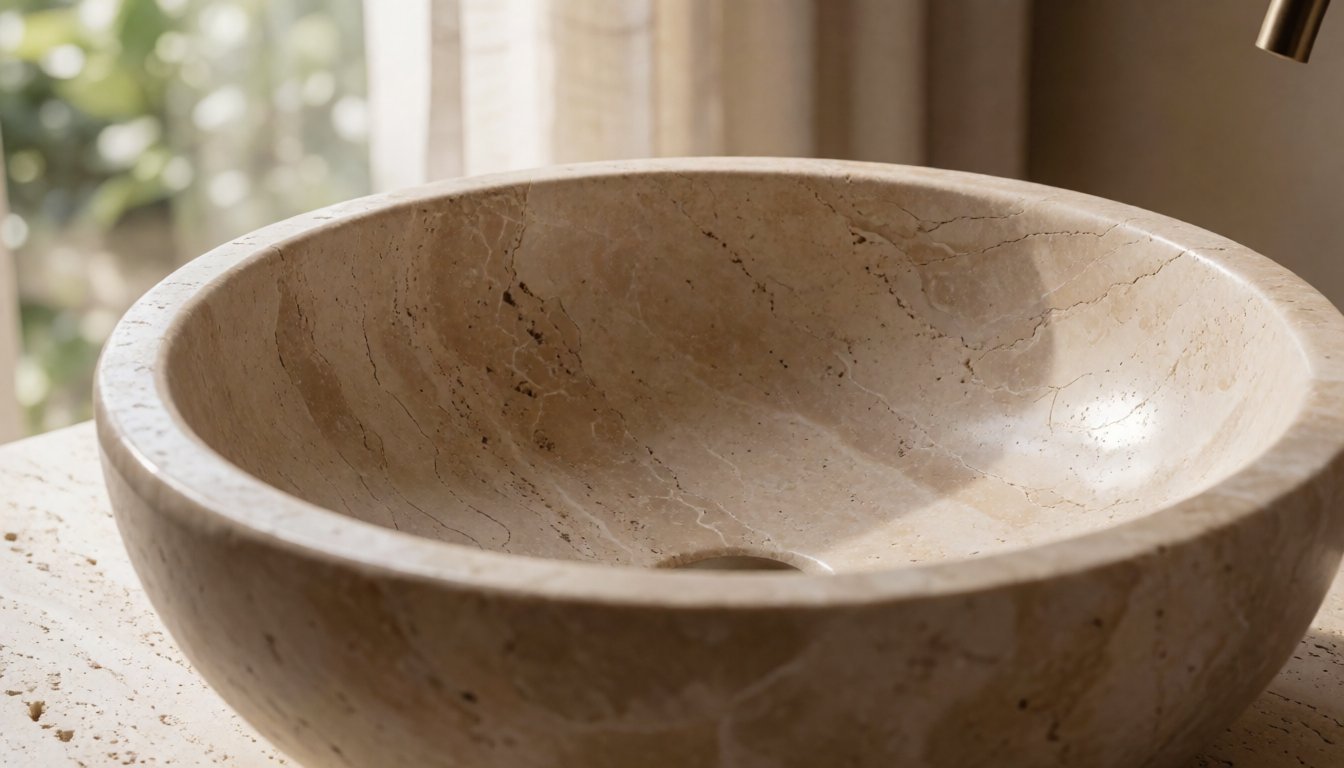
Choosing between travertine, marble, and onyx for your stone basin line requires more than just looking at the sticker price per unit. As a B2B buyer or importer sourcing from China, you are balancing raw material rarity, fabrication complexity, shipping weight, and finish quality against your target retail margin in the US or EU markets. A lower quoted stone basin price often hides higher costs downstream due to breakage rates during transit or inconsistent slab sizes that increase waste. To build a profitable catalog for dropshipping partners or white-label clients, you must understand exactly what drives up the cost of each natural stone and how Gladystone structures its wholesale offerings.
Raw Material Rarity and Base Fabrication Costs
The foundation of any marble sink wholesale price quote is the raw slab availability in China versus local markets like Carrara (Italy) or Georgia (China). Travertine remains one of the most cost-effective options because it forms as a sedimentary rock with lower density, making extraction easier and slabs less prone to cracking during transport. Expect standard travertine basins to start roughly between $180 and $260 USD for an MOQ of 5 pieces in polished finish.
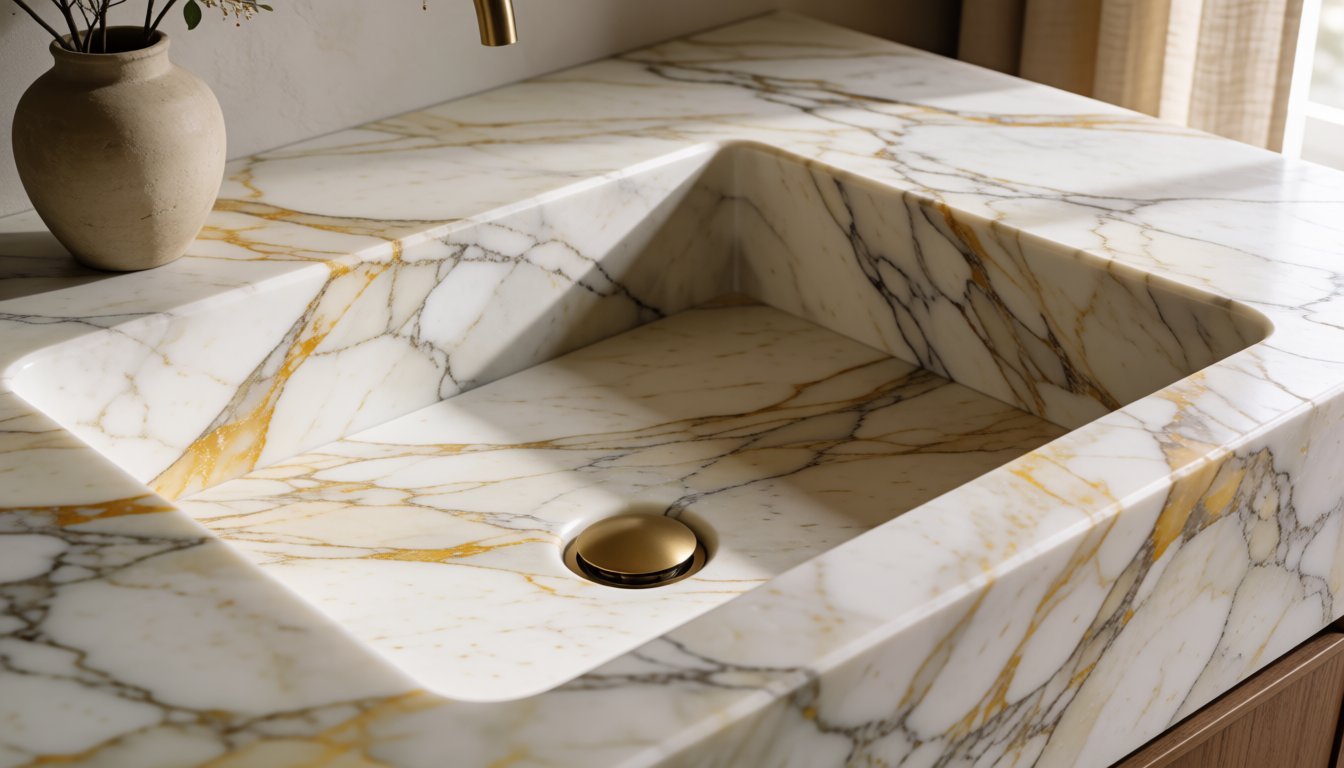
Marble commands a higher premium due to its veining complexity and the effort required to source large, uncracked slabs without visible fissures. A typical marble sink wholesale price ranges from $340 to $580 USD depending on whether you select Calacatta Gold or Statuario varieties with high-definition veins. These stones are heavier; a standard 60cm x 45cm undermount bowl can weigh between 12kg and 18kg, significantly increasing freight charges compared to lighter travertine which might sit around 9-12kg for the same dimensions.
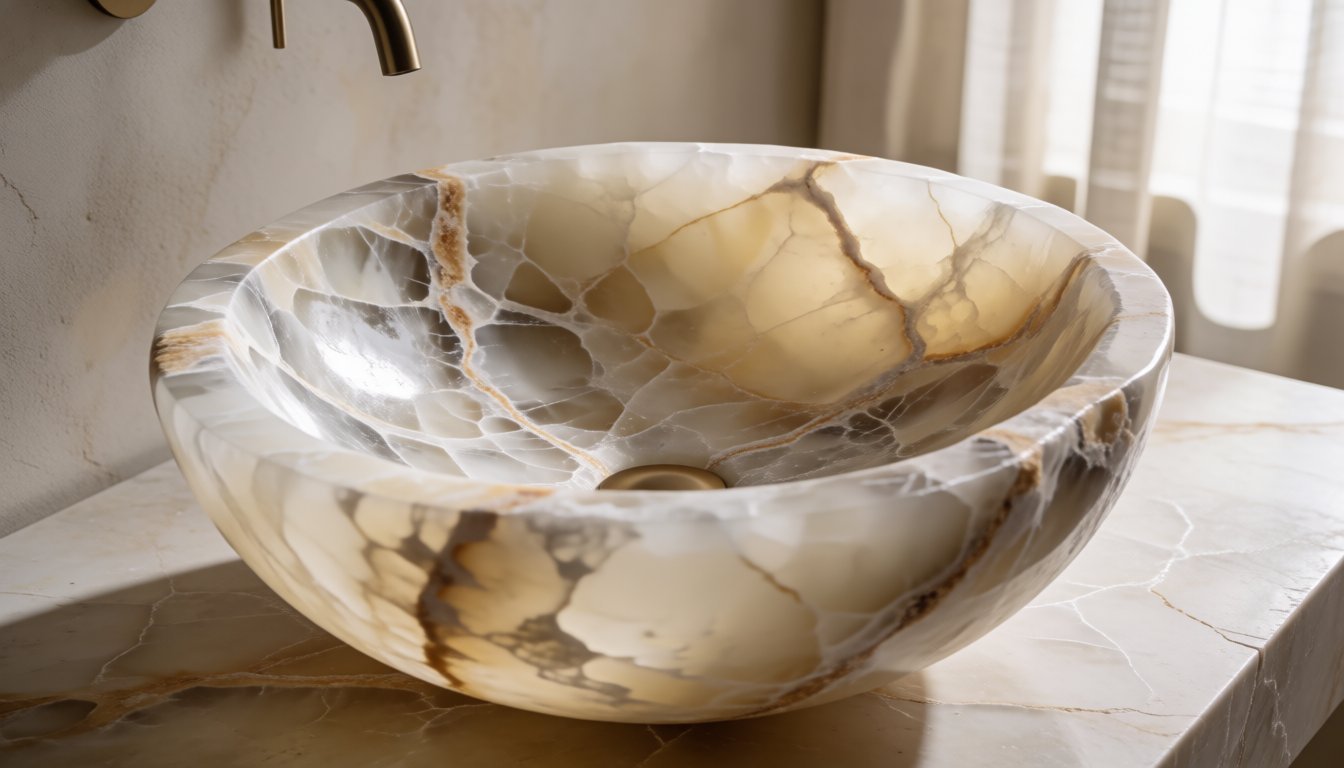
Onyx is an exotic stone with unique translucency but comes at a steep cost due to limited natural deposit availability in quarries like Turkey or China’s Yunnan province. This rarity pushes stone basin price significantly higher, often starting above $650 USD per unit even before accounting for the specialized polishing required to achieve its signature glow. For dropshippers targeting high-end luxury niches, onyx offers excellent visual impact but requires a premium pricing strategy that accounts for lower volume sales and fragile handling needs during logistics.
Fabrication Complexity: Undermount vs. Vessel Styles
The manufacturing process dictates where the bulk of your cost variance lies beyond raw materials. An undermount basin requires precise hole-cutting near the edge, increasing labor time by roughly 30% compared to a vessel style that sits atop the countertop. However, for natural stone like marble or onyx, vessel styles carry higher breakage risks because they involve drilling deeper into the slab center without immediate structural support during machining.
Travertine generally accepts undermount cuts better due to its consistent hardness relative to other porous stones. A standard 16″ x 24″ (approx. 40cm x 60cm) travertine vessel basin with a depth of 8-9 inches typically costs $5–$7 more per piece than an undermount version because the thicker rim adds weight and material usage without adding functional value for price-sensitive wholesalers.
Marble fabrication demands careful temperature control during grinding to prevent thermal shock, which can cause micro-fractures invisible until installation failures occur later in a client’s home. This quality control step is baked into the marble sink wholesale price. If you request rush orders under 15 days instead of standard lead times (usually 20–30 days for natural stone), expect production surcharges to rise by approximately $40-$60 per unit as factories prioritize urgent jobs over batch processing.
Finishing Techniques and Surface Treatment Impact
Surface finish is the single biggest variable affecting final delivery costs, especially when considering international shipping where freight charges are calculated based on cubic volume rather than just weight alone. A honed or leather-finish surface adds minimal extra cost ($5–$10 per piece) but reduces the risk of client complaints about scratches compared to high-gloss finishes which show dust and water spots immediately after unboxing for dropshipping customers.
Polished stone basin price is highest because it requires multiple passes on diamond-impregnated wheels followed by buffing, doubling machine runtime in some cases. Onyx specifically benefits from a polished finish due to its optical properties; however, the polishing compound used must be softer than that applied to granite or quartzite to avoid removing too much material thickness (up to 3mm loss).
For wholesalers managing inventory turnover, matte finishes on travertine offer a middle ground: they look sophisticated without requiring immediate cleaning upon delivery. This option keeps unit costs roughly flat while allowing you to market the product as “low maintenance” for busy homeowners or commercial spaces like spas and hotel lobbies where water stains are unacceptable overnight.
Logistics Considerations: Weight, Breakage Rates and Lead Times
When importing natural stone from China, your landed cost equation includes freight insurance claims frequency based on breakage rates during ocean transit. Travertine typically has a lower breakage rate (under 2%) compared to marble or onyx which can see damage levels exceeding 5% in rough seas without proper crating protocols like corner bracing and moisture-proof wrapping inside steel cages.
Standard lead times for stone basin price calculations should assume:
– Travertine: 18–24 days (standard sea freight) due to easier cutting schedules.
– Marble: 25–35 days, as quarries often batch orders by vein pattern rather than simple color codes.
– Onyx: 30–45 days minimum because inventory availability is sporadic; factories order raw slabs only when receiving firm bookings to avoid holding expensive stock.
For dropshippers needing faster turnaround (under 12 days), air freight options exist but will add $8-$12 per kilogram in shipping fees. Since a single onyx basin can weigh up to 45kg depending on shape complexity, this surcharge drastically alters the final landed cost versus standard sea shipment at roughly $3–$4/kg for consolidated container loads from Guangzhou or Yiwu ports. Always ask suppliers if their quoted price includes export packaging designed specifically for international shipping standards, as generic cartons often result in hidden loss costs that eat into margins unexpectedly fast.