Importing natural stone bathroom vanities requires more than just selecting attractive slabs; it demands precise coordination between your countertop material and your sink manufacturer. A mismatched finish, uneven edge profile, or incompatible drilling pattern can ruin the aesthetic of a high-end installation. For buyers sourcing from China to sell in North America or Europe, understanding how to align these two critical components is essential for maintaining quality control without inflating costs. This guide outlines the technical and logistical steps needed to ensure your stone vanity countertop integrates seamlessly with your chosen basin unit.
Assessing Material Compatibility Before Ordering
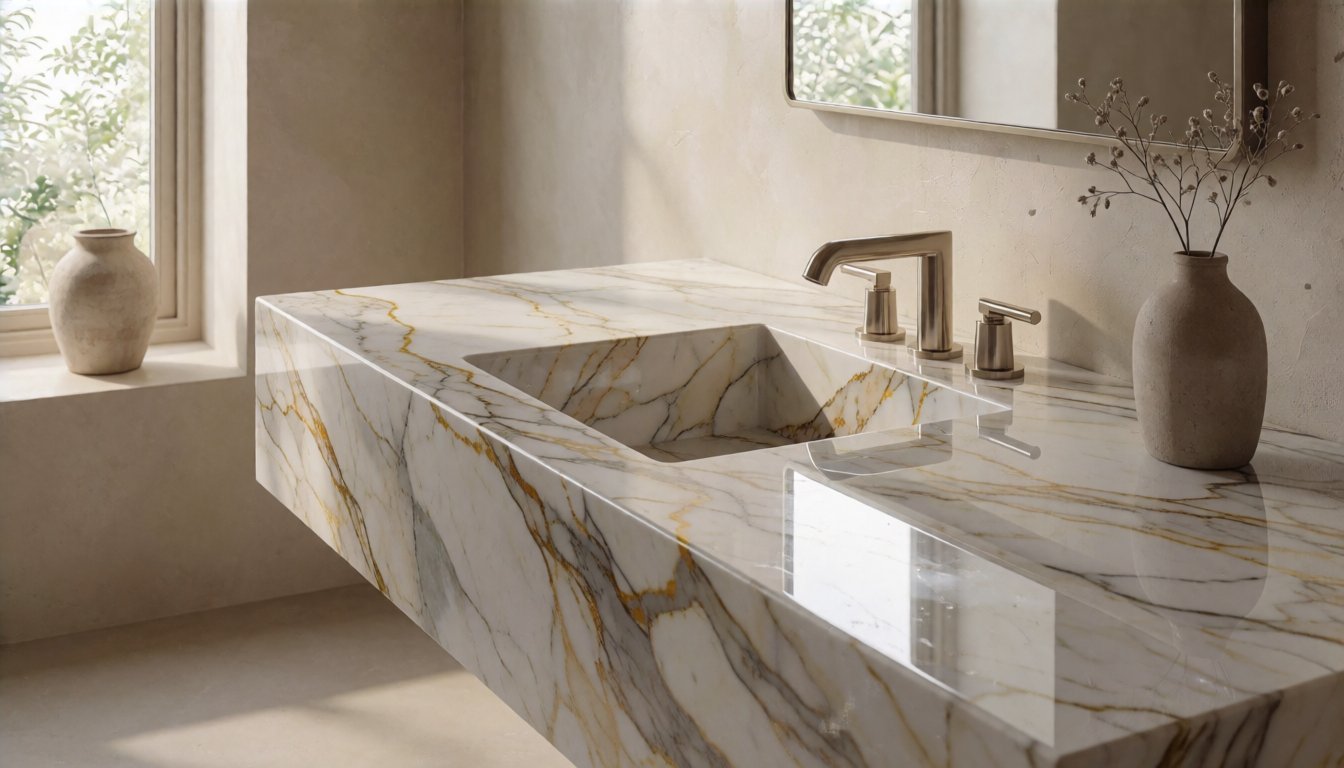
The most common friction point in stone sourcing occurs when a buyer orders a polished marble slab from one factory but receives a sink with a textured or matte finish from another supplier without verifying compatibility. Natural stones like Calacatta Gold, Statuario Venato, and Carrara White vary significantly in their visual characteristics due to mineral deposits. However, the surface texture of the stone must always match the basin rim for a unified look.
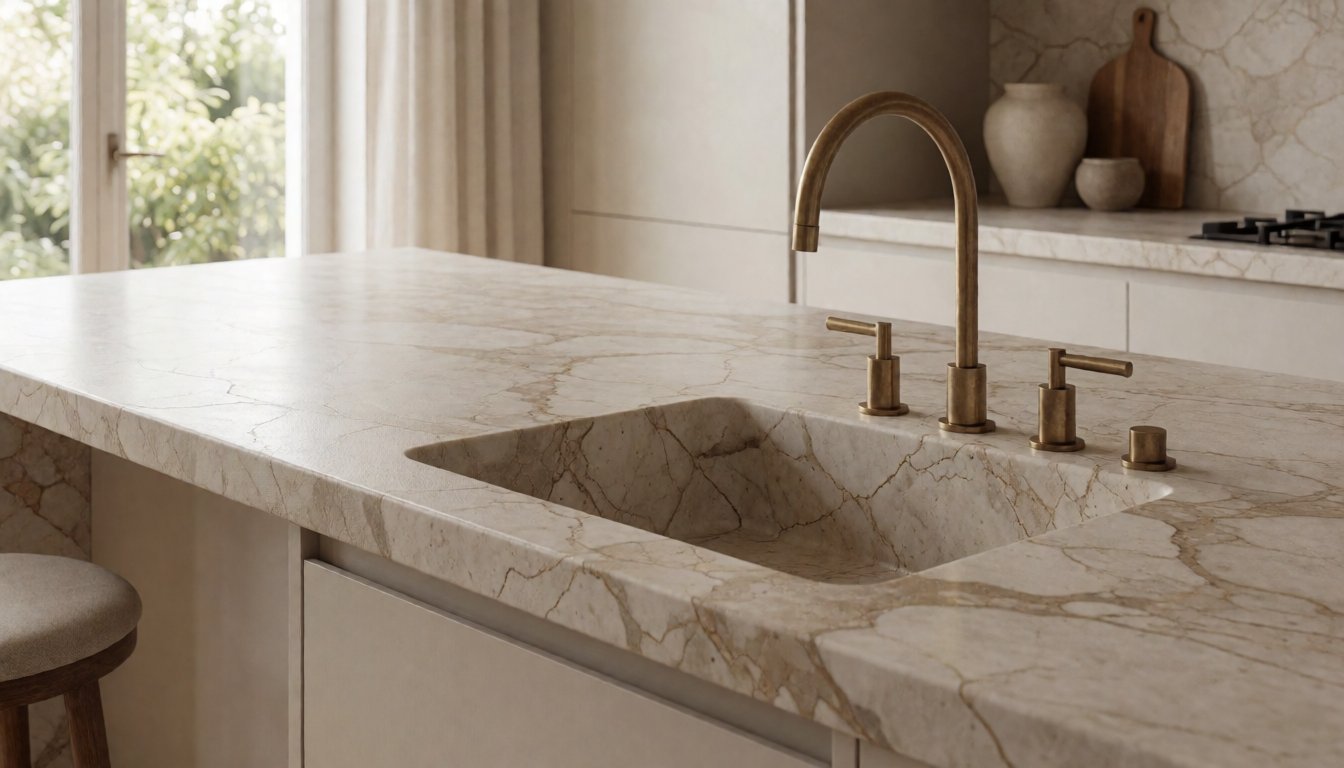
When evaluating potential partners, ask specifically about their finishing capabilities. Can they provide basins with a polished mirror finish? Do they offer honed or leather-textured options that pair well with brushed brass fixtures? If you are working with a marble countertop supplier in China who specializes in slab cutting, confirm whether they can source sinks from local partners to match those specific slabs. Ideally, your main manufacturer should handle both the sink production and the countertop fabrication or have established relationships that guarantee matching output. Do not assume that a polished basin will always look good next to a honed counter; this distinction affects the perceived value of every unit in your inventory.
Technical Specifications for Drilling and Mounting
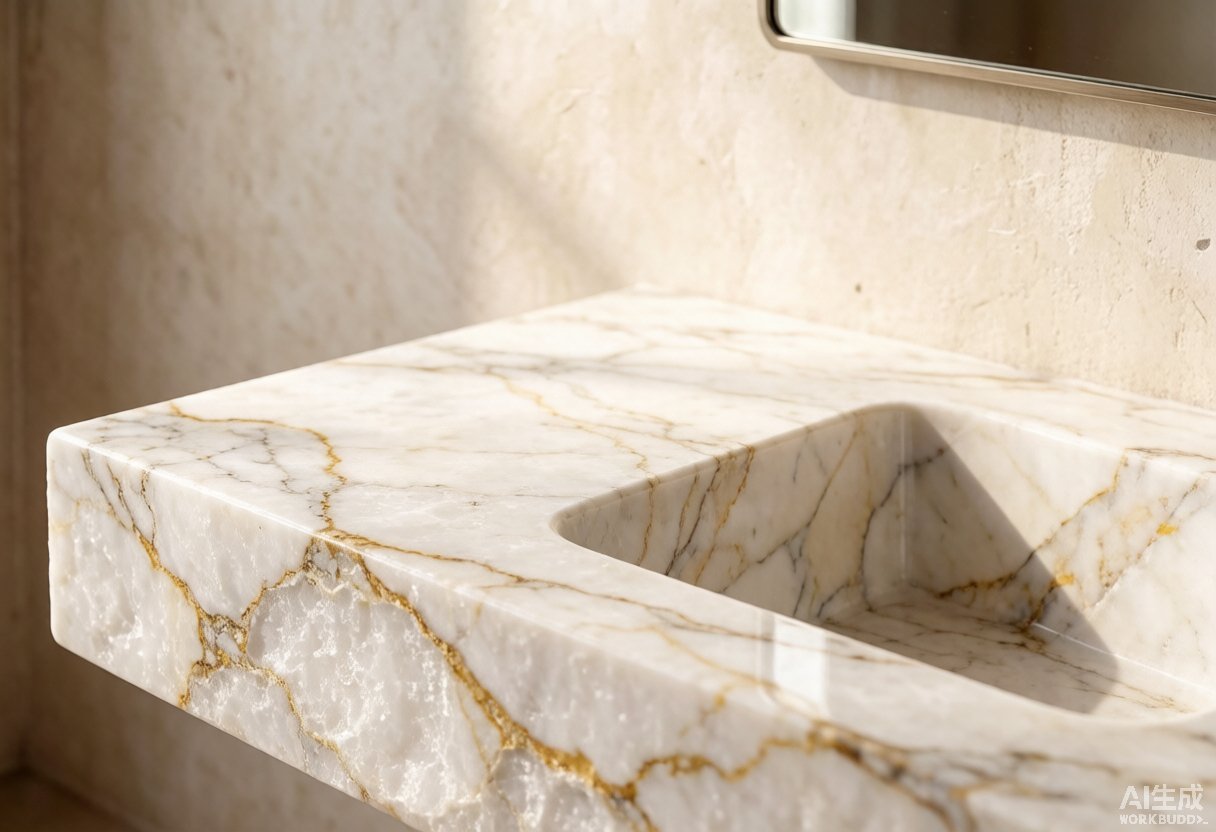
Beyond aesthetics, functional compatibility is non-negotiable. The mounting method dictates how you approach material selection. Undermount sinks require thick stone slabs (typically 2cm or thicker) to support a silicone gasket underneath the basin rim without cracking during installation. Drop-in tops are more forgiving but limit design flexibility regarding edge profiles like waterfall edges.
Pay close attention to drilling patterns and overflow placement when reviewing technical drawings from your supplier. Standard undermount basins usually feature an opening of roughly 45cm x 30cm, while vessel sinks require a smaller cutout, often around 28cm x 19cm depending on the bowl shape. If you are mixing sources, request detailed CAD files or PDFs showing exact hole diameters and distances between overflow holes to faucet centers. Discrepancies here can lead to costly returns if your stone arrives with an incorrectly sized cutout template sent alongside it. Always verify these dimensions against standard US/UK plumbing codes before committing to a production run.
Lead Times, MOQs, and Supply Chain Logistics
Time is the currency of e-commerce dropshipping and interior design projects. When coordinating two suppliers—a stone basin matching partner for sinks and another for stone slabs—you must synchronize their lead times precisely. A typical order from China may take 25 to 35 days depending on slab availability and sink complexity. If your countertop arrives in week four but the basins are delayed until week six, you face storage costs or missed shipping windows during peak seasons like Black Friday.
Minimum Order Quantities (MOQ) also impact this synchronization. Many factories require an MOQ of 10 pieces per design for custom sinks and might have similar thresholds for slabs if cutting to specific sizes. If your business model relies on low-volume, high-margin orders, you need a supplier flexible enough to handle smaller batches or offer consignment stock arrangements. Clarify the payment terms as well; deposits are usually required before production starts (often 30-50%), with the balance due upon completion of quality checks but before shipping. Ensuring both your sink and stone partners agree on staggered shipment dates can optimize cash flow without delaying inventory arrival at US or EU ports.
Quality Control: Inspecting Finishes and Edges
Before approving a mass production order, you must inspect samples for finish consistency. Look closely at the “grain” direction of the slab versus the rim finish of the basin. In high-end installations like hotel bathrooms or luxury residential projects, even minor variations in gloss levels can be rejected by end clients. Ask your supplier to send photos under natural light and request a physical sample kit if possible. This allows you to test how different stone types react to water spots and etching compared to specific basin coatings.
Additionally, check the edge profile of both items before finalizing colors or patterns. A waterfall edge on a countertop demands a perfectly flat sink rim; any waviness in the stone edge will show immediately once installed alongside an unevenly finished basin. Request that your China-based factory pre-drills holes for faucets and soap dispensers according to standard international templates, reducing labor costs for local installers who might otherwise have to drill custom holes on-site.
Building Long-Term Relationships with Chinese Manufacturers
Sourcing success in the natural stone industry relies heavily on trust and communication clarity. Do not hesitate to ask direct questions about their production capacity during peak seasons or how they handle rejected batches due to material flaws like veins running across a sink opening. Reputable suppliers will appreciate transparency regarding potential issues, such as limited stock of specific Calacatta patterns that might take longer to quarry.
By taking these practical steps—verifying finish compatibility, confirming technical specs, aligning logistics timelines, and inspecting samples—you protect your brand reputation while keeping costs under control. Whether you are a dropshipper fulfilling single orders or a wholesaler stocking regional distributors, treating the sink and countertop as an integrated system rather than separate parts ensures higher customer satisfaction and fewer returns from overseas shipments.