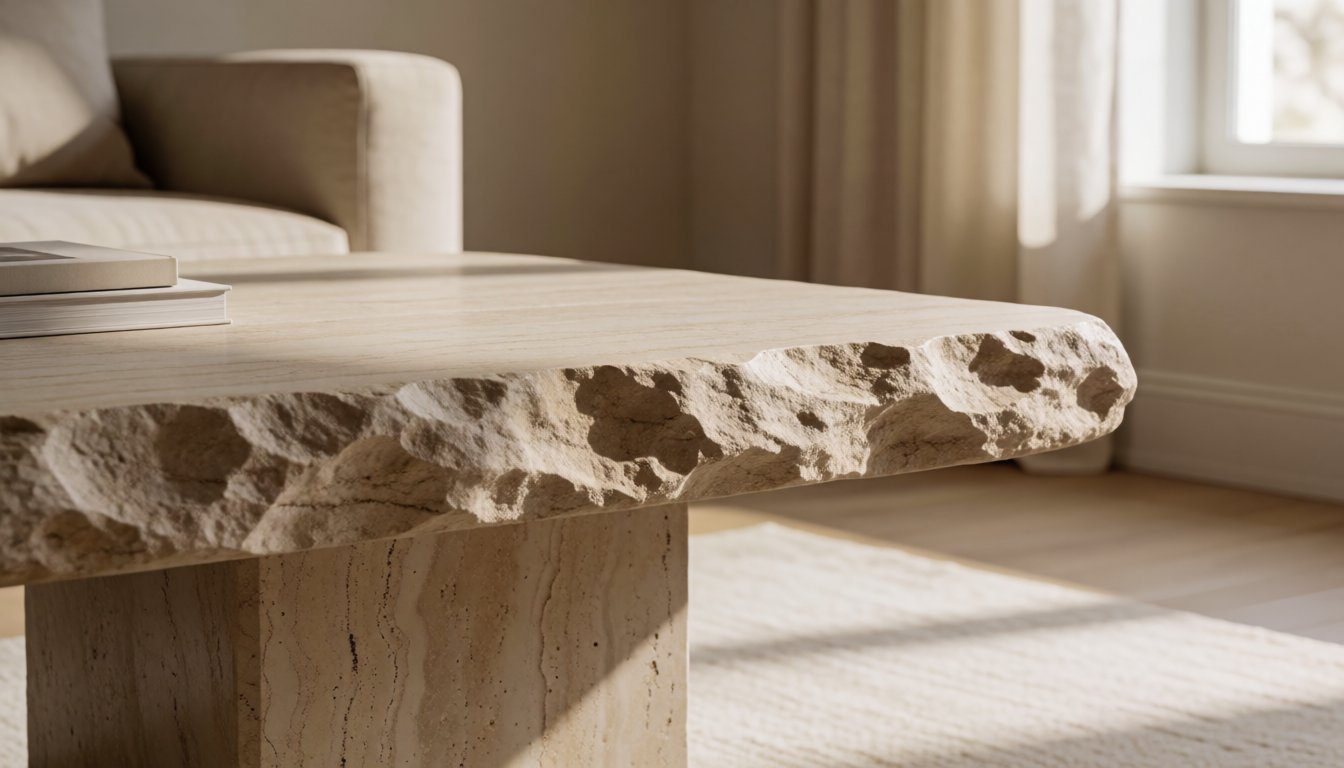
When sourcing furniture for hospitality or corporate environments, aesthetics are secondary to durability and lifecycle cost. A commercial stone coffee table must withstand high foot traffic, heavy luggage drops, and constant cleaning without losing its structural integrity. For buyers in the US and EU looking to build a reliable supply chain with manufacturers like Gladystone, understanding the technical specifications behind these pieces is just as vital as evaluating the visual finish. The difference between a retail showpiece that cracks after six months and an asset that lasts a decade often lies in slab thickness, edge profiles, and base construction methods.
Slab Thickness and Structural Integrity
The most critical spec to verify is the natural stone thickness used for tabletops intended for commercial use. While residential pieces might utilize 2cm slabs, hotel-grade applications typically require 30mm (1.18 inch) or thicker countertops. Thinner stones flex under weight; over time, this micro-movement causes hairline fractures that propagate into major breaks during cleaning cycles.
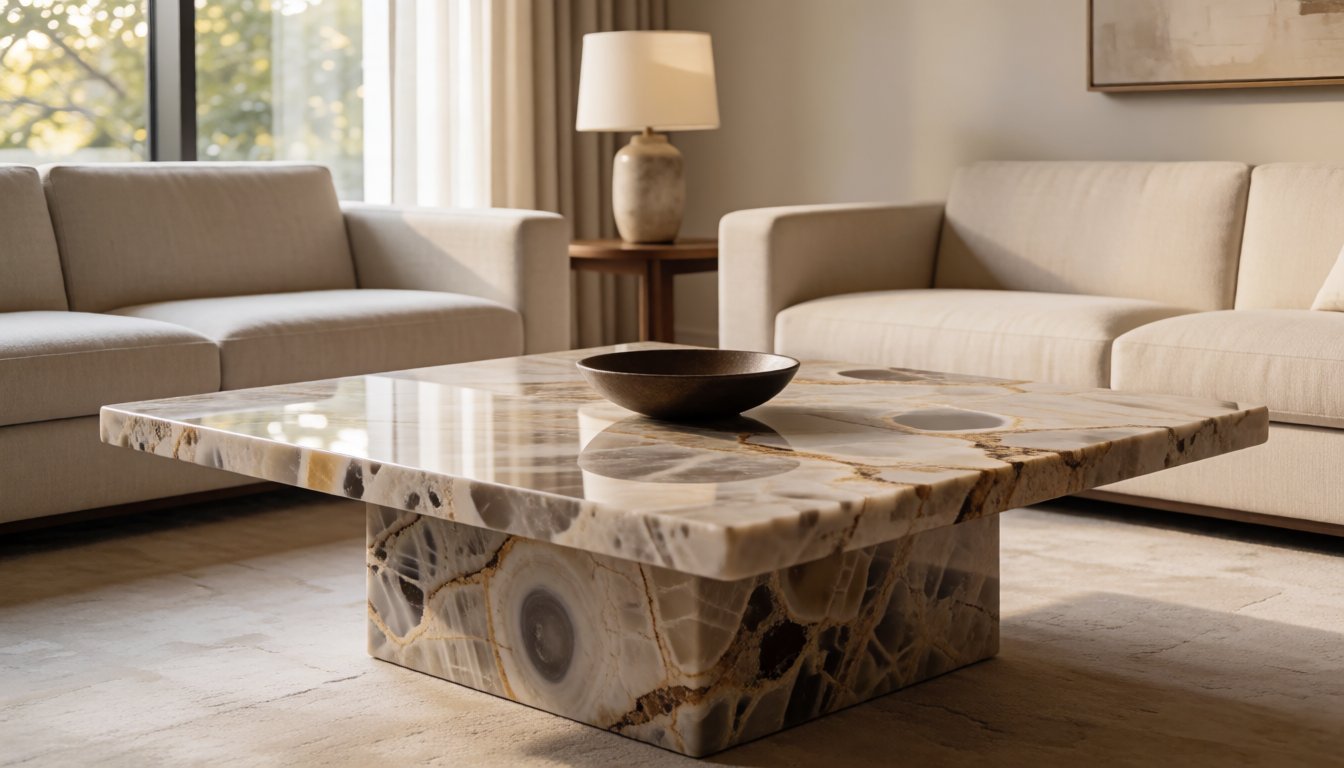
For a robust project, specify at least 3–5 cm thickness. This provides the necessary rigidity to support heavy objects like server carts without bowing. When discussing these dimensions with your supplier, ask for a breakdown of material costs versus finishing costs. A thicker slab increases raw material expenses but significantly reduces the risk of warranty claims later on.
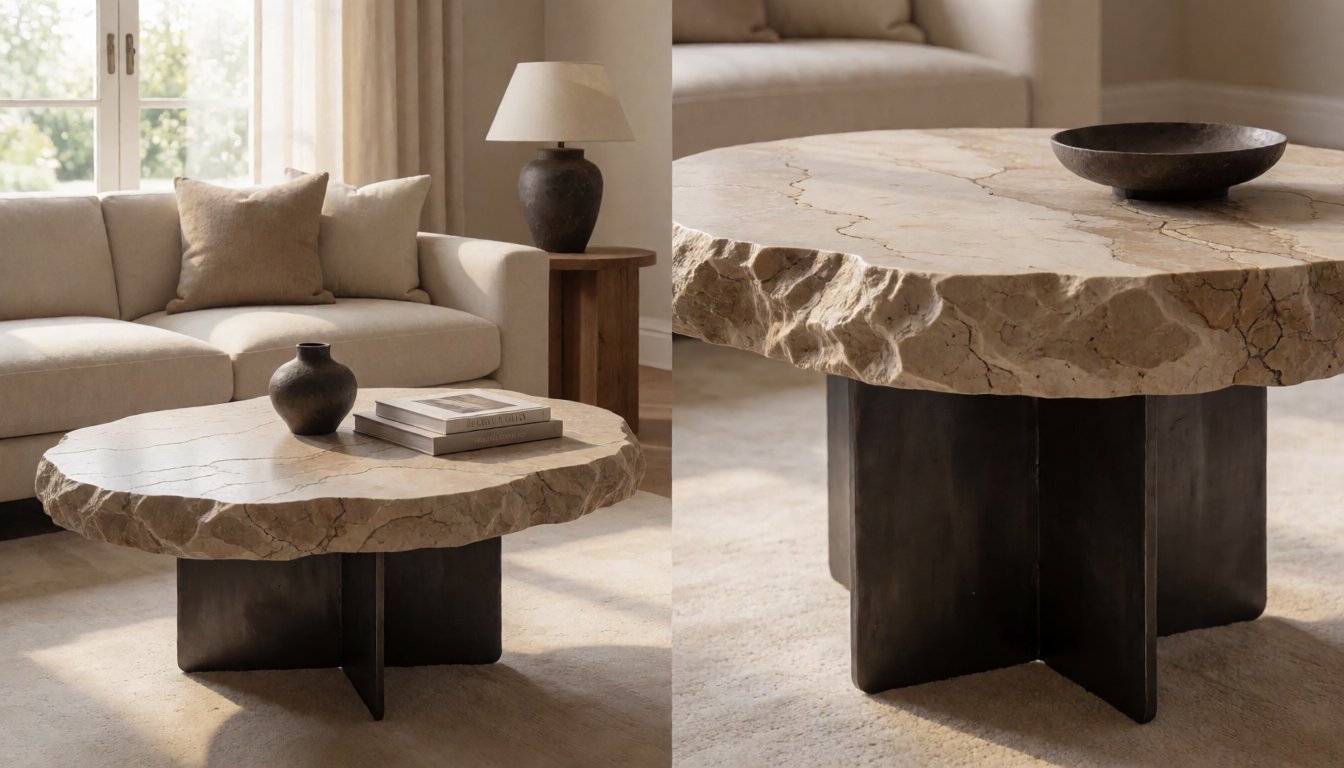
Weight is another factor logistics teams cannot ignore. A standard 120×80 cm table using granite or quartzite at 3cm thickness weighs roughly 60–90 kg depending on the stone density. Marble, being less dense by volume but often featuring thicker slabs to compensate for porosity, can reach similar weights. Ensure your freight forwarder has calculated these loads accurately before shipping from China. A misjudged weight limit during container loading or air cargo transfer will result in damaged goods and costly penalties.
Base Engineering and Load Capacity
The tabletop is only half the equation; the base determines how much stress the stone can endure without cracking at support points. For a hotel marble table, the leg structure must be engineered to minimize point pressure on the slab edges, which are the weakest areas of any cut-to-size top.
Glued-on or bolted bases that touch only one line of contact with the stone concentrate immense force. Superior commercial designs utilize cantilever brackets or wide footprint legs spaced optimally (usually no more than 60–80 cm apart) to distribute weight evenly across the slab area. Ask your manufacturer for load-test data if available, though practical engineering usually dictates a safe limit of 150 kg distributed per table before risk becomes high.
Steel bases require powder coating or heavy galvanization to prevent rust in humid environments like spas or poolside lounges. Wood legs need solid joinery and proper sealing against moisture spills common in hotel lobbies. Do not accept “standard” stock bases for commercial projects without verifying they meet the specific weight requirements of your chosen stone type. Soft stones like Travertine require even more careful base engineering than hard granite to prevent chipping at contact points during guest movement or furniture rearrangement.
Maintenance Protocols and Surface Finishes
Commercial environments demand surfaces that resist staining from coffee rings, wine spills, and acidic cleaning agents used by professional staff. The finish applied directly impacts both visual appeal and maintenance frequency. A high-gloss polish looks stunning initially but shows water spots immediately in lobbies with hard tap water. For hotels in coastal regions or areas with humid climates, a honed or leather-textured surface is often the preferred spec.
Honed surfaces reduce glare under bright lobby lighting while hiding minor scratches better than polished stone. However, they require slightly more frequent sealing to prevent oil-based stains from penetrating open pores. When requesting samples for your office stone table line-up, ask specifically about chemical resistance ratings against common cleaners like ammonia or bleach solutions used in janitorial contracts.
Durability also depends on the edge profile chosen during fabrication. Eased edges and pencil rounds are softer but prone to chipping if struck by a rolling suitcase. For high-traffic areas, specify bullnose (rounded) or ogee profiles that offer better protection against accidental impacts. These profiles add roughly 2–4 cm to the overall height of the table depending on the base design, so verify total dimensions early in the sourcing process to ensure they match your interior design standards and ceiling heights for stacked storage if needed.
Lead Times, MOQs, and Customization Realities
Sourcing from a factory like Gladystone offers advantages such as lower minimum order quantities compared to domestic US suppliers or European quarries, but lead times remain a key operational variable. For custom designs involving specific stone calibrations, expect production cycles of 25–40 days after deposit payment and final approval of digital proofs. If you need urgent stock for an upcoming season opening in the EU, standard shipping timelines from China usually add another 30–45 days depending on port congestion and customs clearance efficiency.
Typical MOQs for commercial lines range between 10 to 20 units per SKU when mixing stone types or colors within a single container load. Bulk orders of over 50 pieces might negotiate better pricing tiers, typically reducing unit costs by roughly 8–12% compared to small batch production runs. Always clarify whether tooling changes for custom edge profiles incur additional setup fees; some factories charge per prototype run while others absorb the cost into larger volume contracts.
White-label opportunities are available but require strict adherence to branding guidelines and quality control checkpoints before final packaging. Insist on third-party inspection reports or video walkthroughs from your factory representative once production reaches 80% completion. This practice prevents shipping defective batches that could tarnish a brand’s reputation upon arrival in European warehouses.
By focusing on these specific technical parameters—slab thickness, base engineering, surface chemistry, and realistic lead times—you position yourself as an informed buyer capable of managing complex supply chains effectively. The goal is not just to sell furniture but to provide assets that withstand the rigorous demands of commercial spaces year after year.