The stone market has been dominated by quartz and granite for years, but there is a distinct shift happening behind the scenes of major home furnishing brands. The travertine furniture trend is resurging with significant momentum from wholesale buyers who are looking beyond durability alone to find unique texture and value. For importers sourcing directly from factories like Gladystone in China, understanding this pivot toward natural stone requires a look at material properties, pricing structures, and specific product applications that drive current demand. This resurgence isn’t about ignoring the flaws of natural rock; it is about leveraging them as selling points for high-end market positioning.
The Economic Advantage of Porous Stone Wholesale
When evaluating porous stone wholesale options, cost per square foot or kilogram becomes a primary metric alongside finish complexity. Travertine typically commands lower raw material costs than granite because the quarrying process yields more usable slabs from a single block compared to harder stones that require extensive cutting and waste removal. For B2B buyers aiming for healthy margins in the US or EU markets, this inherent cost efficiency translates directly into better retail pricing power without sacrificing perceived luxury.
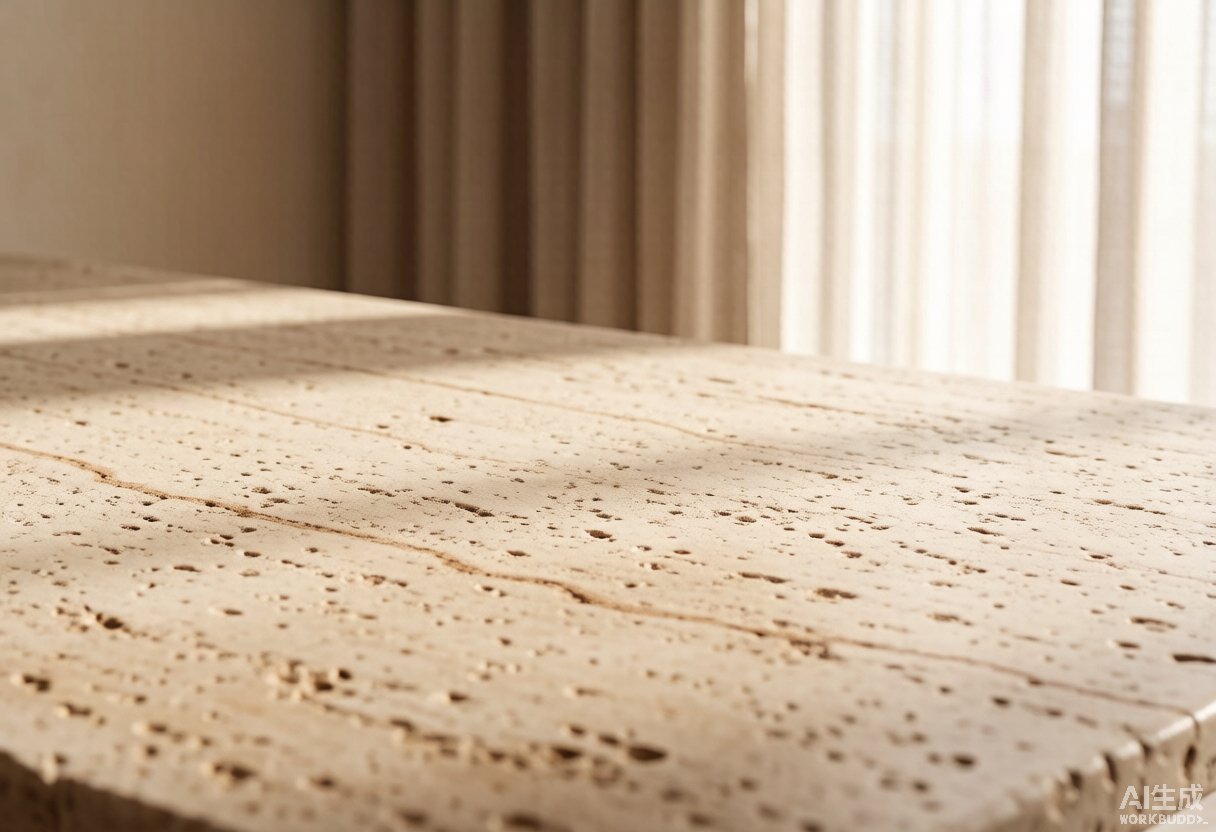
However, the economics of porous stone extend beyond raw material costs. The processing requirements differ significantly from granite. Travertine is softer, meaning CNC machining and polishing can be done faster on standard equipment found in most Chinese factories like Gladystone. This speed reduces lead times for custom orders by roughly 20% to 30%. When you factor in the lower freight weight due to thinner slabs often used for tabletops compared to granite blocks, shipping costs also decrease. These savings are crucial when negotiating MOQs (Minimum Order Quantities) with suppliers; a buyer can secure larger volume discounts because the factory’s production cycle is less rigid than that of hard stone manufacturing lines.
Design Applications Driving the Travertine Table Trend
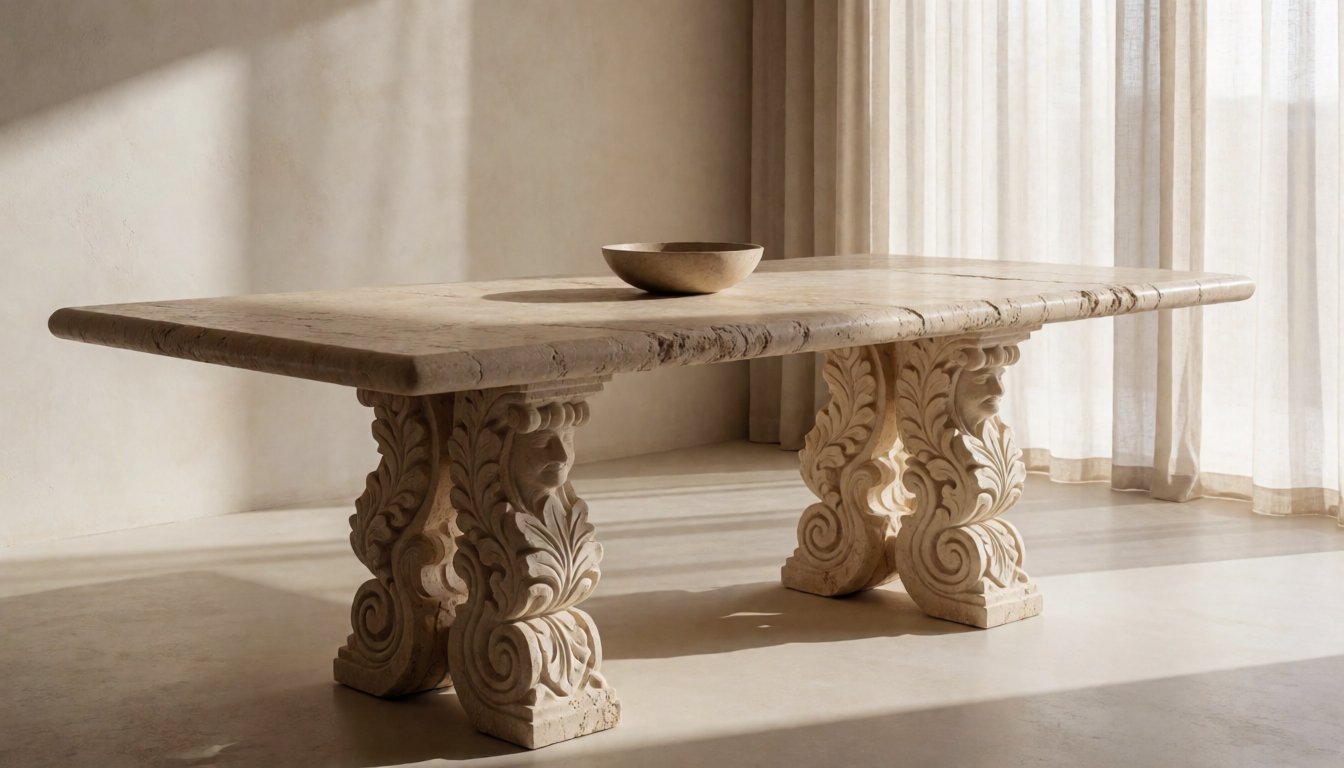
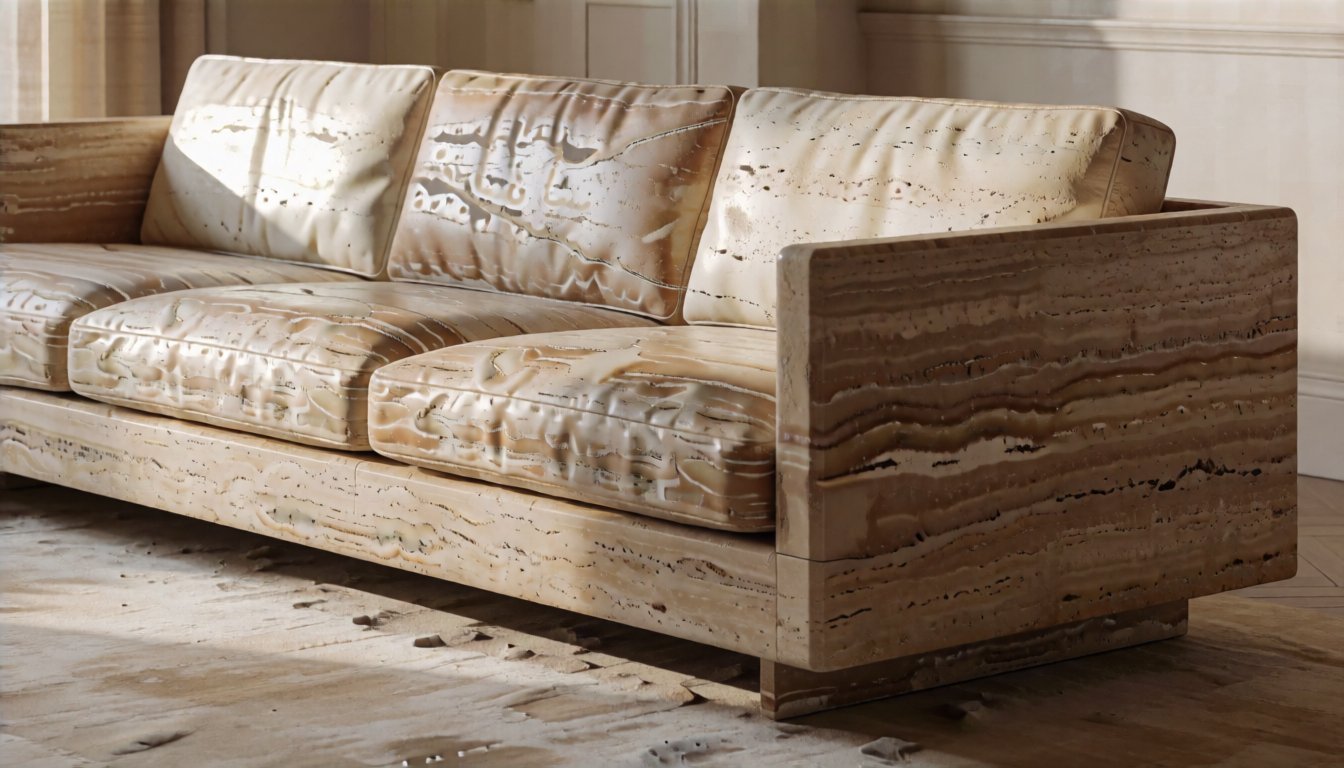
The specific design applications for this material have evolved to match modern interior aesthetics, fueling the travertine table trend. Gone are the days when travertine was strictly used as a backsplash tile or bathroom floor covering in 2015. Today’s designs feature large-format slabs with natural veining left visible on dining and coffee tables.
For wholesale buyers analyzing specifications, note that standard travertine tabletops now commonly range from 9mm to 18mm thickness depending on the application:
* Coffee Tables: Typically utilize an 18-20mm slab cut into shapes ranging from round (60cm diameter) to large rectangular forms. The weight of these pieces usually lands between 45kg and 70kg, requiring sturdy leg mechanisms or hidden steel reinforcement inside the stone if it is a single-piece top.
* Dining Tables: These often use engineered travertine with resin fillers for larger spans (up to 2 meters) or solid natural slabs for smaller sets (6 people). The weight increases significantly here, reaching roughly 150kg per slab before the edge profile is applied and finished.
Buyers must also consider how these tables are presented in catalogs. High-resolution imagery showing water resistance treatments on travertine helps overcome consumer fears about staining. The ability to mix porous stone with brass hardware or matte black metal legs creates a “rustic luxury” look that resonates strongly with DIY home renovation channels and boutique hotel projects.
Quality Control for Natural Stone Variability
One of the biggest hurdles when importing natural stone is managing variability without sacrificing quality standards. Unlike quartz, which offers uniformity, every slab of travertine comes with unique pits, color variations, and fossil inclusions that are actually desirable to high-end consumers but problematic during QC if not managed well. When sourcing from a factory like Gladystone, the critical conversation revolves around “filling” versus “exposing.”
Buyers need to ask specifically about their filling methodology:
* Epoxy Filling: Used for deep pits and voids to create a smooth surface suitable for high-traffic dining areas. This adds roughly 10% to material costs but extends the usable yield of each slab by up to 25%.
* Resin Infusion: Often used in engineered stone products where natural travertine is mixed with resin binder to stabilize color and reduce porosity while maintaining a natural look.
It is vital to request photos or videos of raw slabs before production starts for custom orders. Do not rely solely on finished sample photos, as the filling process can alter the perceived depth of veins dramatically. For large volume travertine furniture trend projects, insist on seeing “reject” rates from previous batches regarding cracking during slab splitting (splitting). Natural stone is prone to tension fractures; a reputable factory will disclose their tolerance levels for cracks under 5mm versus those requiring full rejection.
Shipping Logistics and Weight Management
Logistics play an outsized role in the final landed cost of natural stone furniture. A standard shipping container filled with granite tables might carry significantly less volume than one loaded with travertine due to density differences, but weight remains a universal constraint for ocean freight and trucking within destination countries like Germany or France.
Typical weight limits per pallet for international sea freight are around 2 tons (excluding packaging), though land transport in the EU often restricts single loads to roughly 15-20 tonnes depending on road regulations. For porous stone wholesale, optimizing how you pack these heavy items is essential.
* Palletization: Ensure slabs for dining tables are stacked with proper spacing (usually 3cm gaps) to prevent chipping during transit. Each layer of an 18mm slab stack adds roughly 25-30kg per square meter depending on the specific stone density and water absorption rate.
* Packaging: Use thick cardboard corner protectors rated for impacts over 4 meters drop height, as ocean freight can involve rough handling at multiple ports.
Lead times remain a competitive factor. While granite production might take 15-20 days due to longer polishing cycles on harder materials, travertine often moves through finishing lines in 7-10 days once cut to size. This faster turnaround allows buyers to respond quicker to seasonal demand spikes or specific design requests from interior designers who need samples approved before bulk orders are placed. Always confirm if the quoted lead time includes both production and inland transport within China, as this can add another 3-5 days depending on port congestion in Shanghai or Ningbo where many stone exporters operate.
Closing Thoughts for Importers
The resurgence of travertine furniture represents a strategic opportunity rather than just a passing fad. By understanding the nuances of porous stone wholesale—specifically managing variability, optimizing logistics based on lighter weights, and leveraging faster production cycles—importers can secure products that command premium prices in Western markets. The key is to communicate clearly with manufacturers about specific design needs regarding filling techniques and finish depths. When buyers approach suppliers like Gladystone with a deep understanding of these material constraints and market demands, they position themselves as informed partners ready for long-term collaboration rather than one-off transactions chasing the lowest possible unit price alone.