
When sourcing stone sinks for US or EU markets, the most critical technical conversation happens before the customer even sees the countertop. As an importer dealing with Gladystone’s natural-stone inventory, you know that installation failures usually stem from a mismatch between the sink design and the plumbing rough-in. Whether you are fulfilling a Shopify order for a small kitchen remodel or supplying a large contractor with fireplaces and vanities, understanding the difference between an undermount sink rough in and a vessel sink rough in is essential for maintaining low return rates and high client satisfaction. These aren’t just aesthetic choices; they dictate drain placement, overflow pipe locations, and the structural support required behind the wall.
Structural Requirements and Drain Placement
The primary distinction lies in how water enters the basin and exits through the plumbing system. An undermount sink rough in typically features a standard 4-inch or 3½-inch drain hole centered at the bottom of the bowl. For a standard granite or quartz vanity top from our factory, the drain is usually positioned between 25 cm and 30 cm from the back wall. This placement aligns perfectly with standard P-trap connections found in North American plumbing codes.
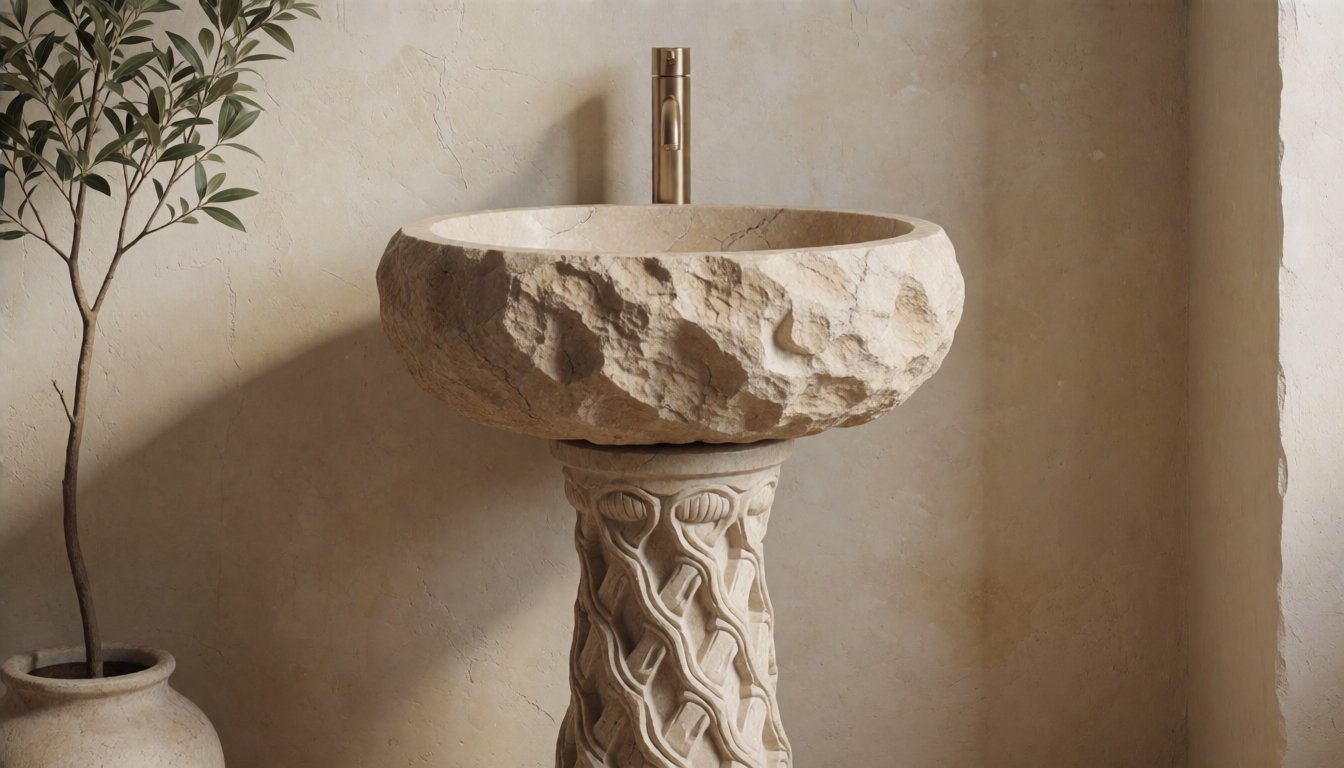
In contrast, a vessel sink rough in requires significantly different infrastructure because there is no countertop to hide the pipes. The plumbing must be installed directly into the cabinet framing or behind a dedicated pedestal. Vessel sinks often utilize a 3-inch or 4-inch drain at the bottom of the bowl, but they lack an overflow hole unless specifically requested during production. This means the stone sink plumbing spec for vessel basins must explicitly include an overflow channel if the client wants that safety feature against overflows.
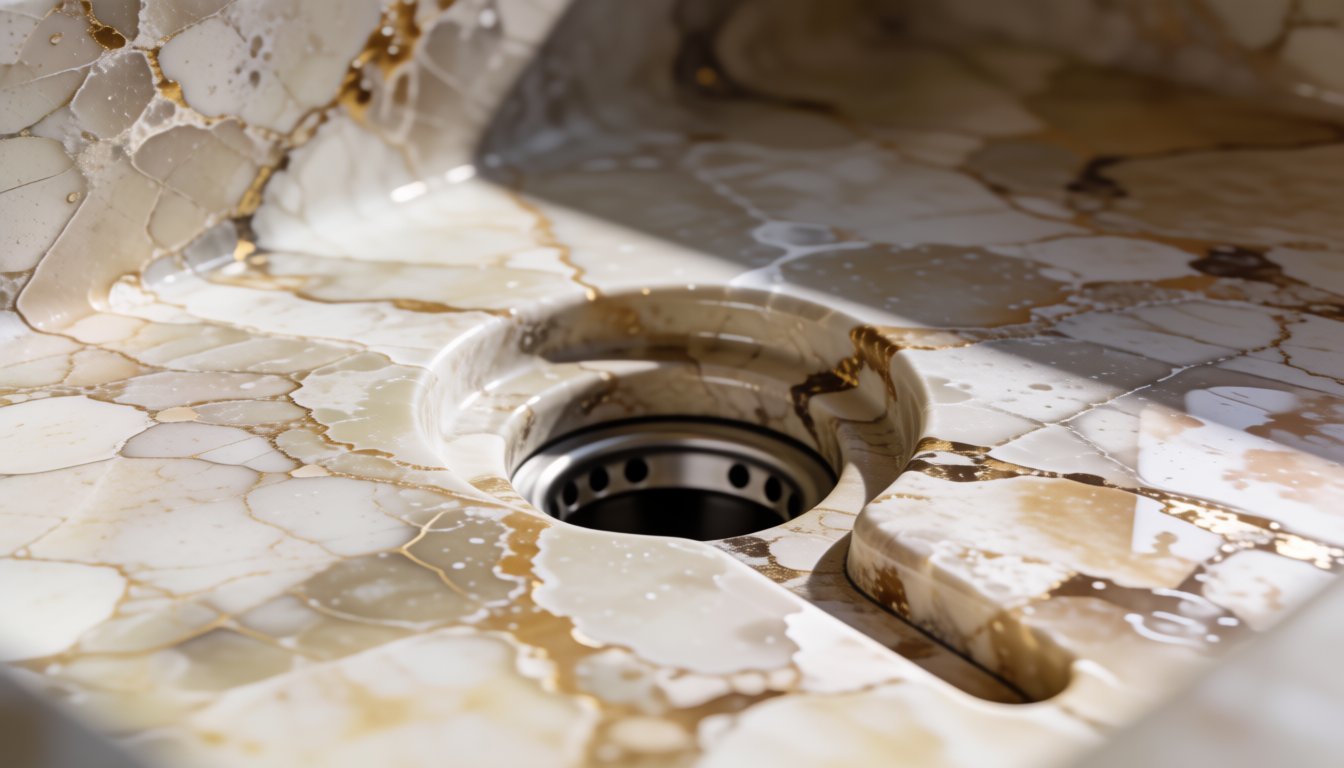
For our B2B clients, this affects the pre-assembly process. When we manufacture a vessel sink like our popular oval marble models (roughly 45 cm in height and weighing up to 18 kg), we drill the drain hole precisely as ordered. If you ship a vessel sink without an overflow channel to a market that expects one, you will face costly modifications at the job site. Always verify the “sink type” column in your purchase order—whether it specifies undermount, top-mount, or vessel—to ensure our factory engineers the correct internal drainage structure before cutting the stone.
Wall Penetration and Cabinet Depth
The physical wall penetration required for an undermount sink rough in is standard and predictable. Most US installations involve a single 3-inch to 4-inch hole cut into the countertop edge that connects to the drain line running behind the vanity cabinet. The waste arm extends straight down into the P-trap located within the base cabinet. This setup works seamlessly with our standard 18-inch or 24-inch depth vanities, provided the cabinet has a flat bottom where the waste pipe can sit without obstruction.
A vessel sink rough in, however, creates a much more complex installation scenario because the plumbing stack is exposed. The drain pipe usually runs vertically down from the basin into a floor drain or a specialized standpipe inside the cabinet. Since vessel sinks sit on top of the counter rather than being attached to it, there is no need for an overflow hole in the sink itself, but the cabinet must accommodate the vertical height of the plumbing trap (often 12 inches to 18 inches).
When selling these items to wholesalers or interior designers, specify clearly if the unit includes a “plumber’s base” or pedestal. Our vessel sinks are often sold as standalone units requiring a separate pedestal purchase or a custom-cut cabinet insert. If you fail to clarify this in your product description, a contractor might order a 60 cm wide vessel sink expecting it to bolt directly to a standard vanity, only to find the plumbing stack cannot fit through the cabinet back panel. Always include lead time estimates for any specialized plumbing accessories needed for these installations.
Material Weight and Mounting Stability
Weight distribution also plays a hidden role in the rough-in phase. Our undermount sinks, carved from thick slabs of granite or quartzite, are heavy—often between 40 kg and 60 kg depending on the stone type and basin depth. The undermount sink rough in relies on the countertop thickness (usually 2 cm to 3 cm) to support this weight securely. The adhesive sealant around the rim prevents water leakage, but the structural load rests entirely on the counter edge.
Vessel sinks present a different challenge due to their exposed nature and varying sizes. A large rectangular stone vessel sink might weigh over 25 kg. Because it sits freely on the countertop, stability depends on the friction between the stone base and the counter surface. While less critical than the sink itself, the plumbing connection for a vessel sink must be robust enough to handle the vertical drop from the basin to the trap.
For Gladystone’s white-label partners, this means customizing the product specs to match local building codes. Some regions require specific anchoring methods for heavy stone vessels. If you are exporting to Europe, ensure your technical sheets note that vessel sinks generally do not require overflow holes unless specified, whereas undermount units almost always include them by default. This small detail prevents plumbing errors that could lead to water damage claims against your brand.
Finalizing the Stone Sink Plumbing Spec
To minimize installation headaches and maximize repeat business, you must treat the “stone sink plumbing spec” as a core part of your product data sheet rather than an afterthought. When responding to RFPs from US wholesalers or EU designers, provide clear diagrams showing drain locations for both undermount and vessel configurations. Indicate if the unit is sold with a pre-installed overflow pipe or if it requires post-installation drilling.
Lead times for custom plumbing modifications can extend your delivery window by 3 to 5 days. If a client requests a specific waste arm length or a non-standard drain offset, factor this into your production schedule early. Typical pricing for these stone sinks ranges from $180 to $450 USD depending on the slab size and finish, but the margin is often at risk if returns occur due to plumbing incompatibility.
By clearly defining whether a customer needs an undermount sink rough in or a vessel sink rough in, you protect your brand reputation and ensure smooth installations. Remember that natural stone varies; a 3 cm thick quartz slab behaves differently than a 2 cm granite slab regarding support requirements. Always hedge your advice with phrases like “typically requires” or “standard configuration includes,” but never leave the critical plumbing details ambiguous. Your clients in the US and EU will appreciate the precision, and they will be more likely to reorder from you for their next project involving sinks, bathtubs, or decorative stone elements.