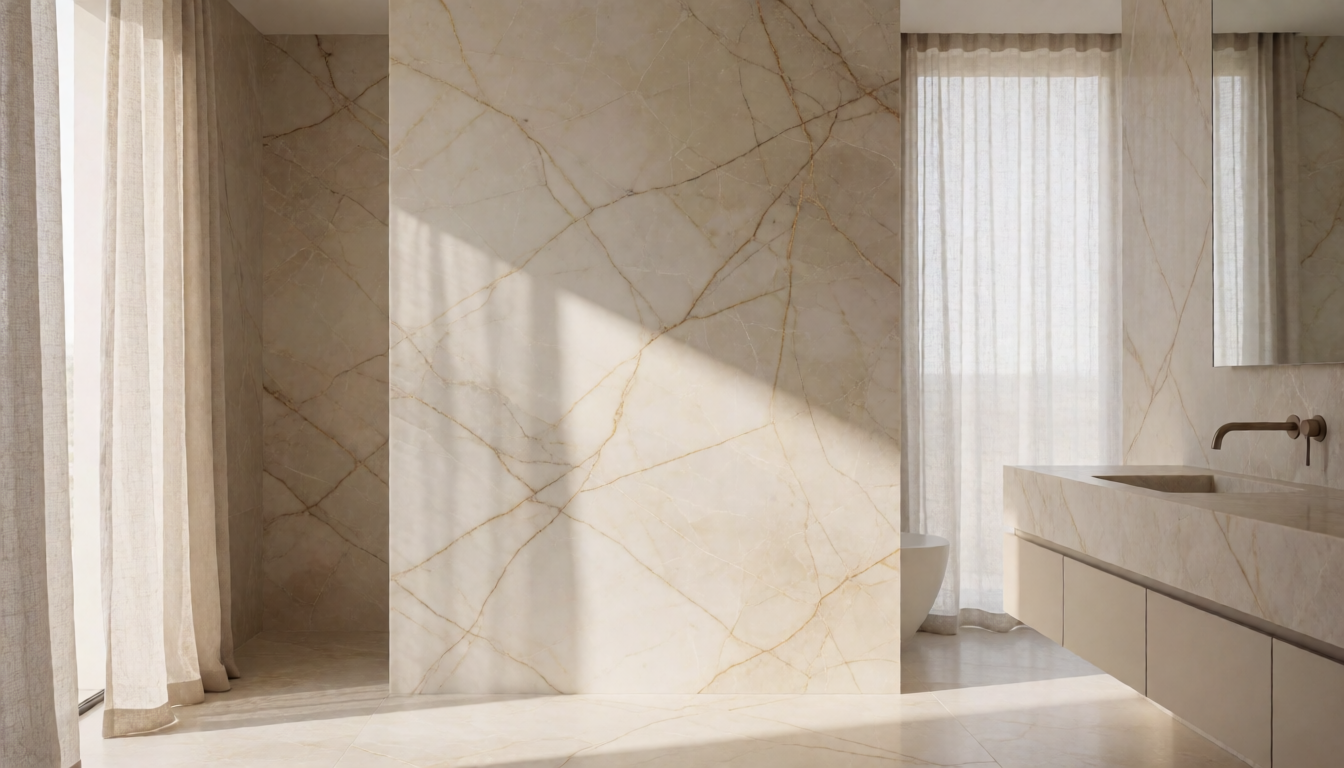
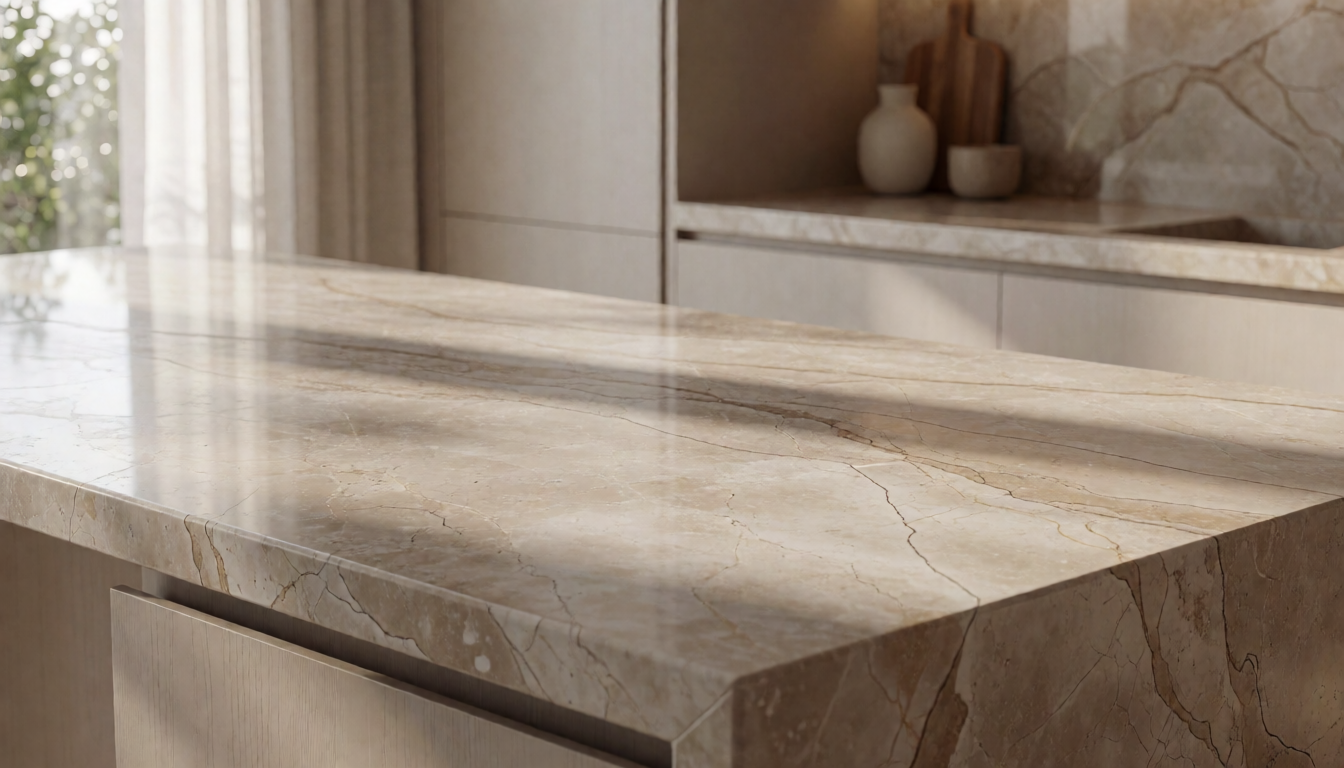
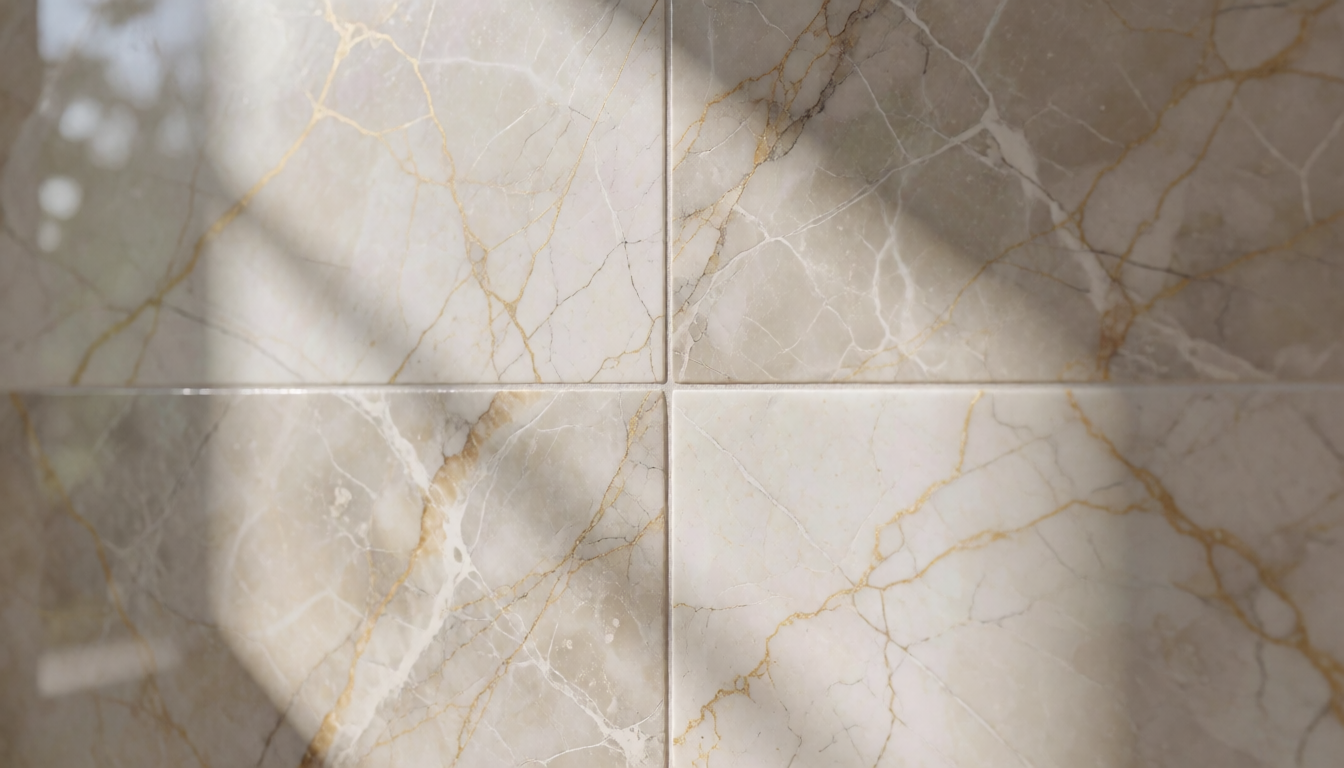
Large-format marble tiles are slabs measuring 1,200mm or wider on at least one side, installed to minimize grout lines and create continuous stone surfaces. In 2026, designers use them to wrap bathrooms, kitchens, and living spaces in seamless marble that reads as one monolithic material rather than a grid of tiles.
What Are Large-Format Marble Tiles and Why Do They Matter?
Where standard tiles break a wall into a busy grid, large-format slabs — commonly 1200×2400mm up to 1600×3200mm — deliver expansive, uninterrupted planes. The reduction in grout joints is not merely aesthetic: fewer seams mean fewer places for mould, staining, and visual clutter. For architects designing spa-like bathrooms or open-plan living areas, the slab becomes a single material envelope that makes the space feel larger, calmer, and more architectural.
Why Is the Seamless Look Trending in 2026?
- Stone-drenching: Full marble showers and wrapped rooms create immersive luxury once reserved for celebrity homes.
- Biophilic warmth: Earthy travertine and Crema Marfil tones replace cold white grids with comforting, natural palettes.
- Low-maintenance luxury: Fewer grout lines means less cleaning and sealing over the product’s lifespan.
How to Specify Large-Format Stone for Your Project
- Plan book-matching: Reserve sequential slabs so adjacent veining mirrors correctly across walls.
- Reinforce substrates: Slabs are heavy; floors and walls need rated backing and experienced crews.
- Choose the finish: Honed or leathered surfaces hide water marks better than polished in wet rooms.
Large-format marble eliminates the visual noise that traditional 300×300mm tiles introduce through grout lines. On both floors and walls, a 1600×3200mm slab amplifies natural light and makes a compact bathroom feel like a spa suite. The continuous veining also creates a "stone-drenched" envelope — walls, floor, and even the shower ceiling share one material story. Installers gain from fewer joints to seal and clean, while homeowners gain a surface that photographs as architecture, not decoration. The trade-off is weight and handling: slabs require reinforced substrates, experienced crews, and book-matched planning so adjacent pieces mirror correctly. For 2026 specifications, honed or leathered finishes in warm travertine and Crema Marfil tones pair best with the biophilic, earth-toned palettes now dominating luxury residential design.
Large-Format Slab vs. Standard Tile
| Feature | Large-Format Slab | Standard Tile |
|---|---|---|
| Grout lines | Minimal / none | Multiple per m² |
| Perceived space | Larger, seamless | Gridded, busier |
| Cleaning | Fewer seams | More joints to maintain |
| Installation | Specialist crew | Standard tile setter |
Frequently Asked Questions
Are large-format marble tiles harder to install?
Yes. Their weight demands reinforced substrates and specialist handling, but the result is a seamless, monolithic surface standard tiling cannot match.
Do large tiles make a small bathroom look bigger?
Consistently. Minimal grout lines and continuous veining visually expand the room and amplify available light.
Which marble finish works best for large-format walls?
Honed or leathered finishes in travertine or Crema Marfil — they hide water marks and suit 2026’s warm, earthy palettes.
Glady Stone: Seamless Stone Surfaces for 2026 Projects
Glady Stone supplies large-format marble and travertine slabs with book-matching services for architects and wholesalers specifying seamless residential and hospitality interiors.
Browse the Glady Stone large-format marble slab collection for seamless bathroom and living-space surfaces in travertine, Crema Marfil, and bookmatched Calacatta.