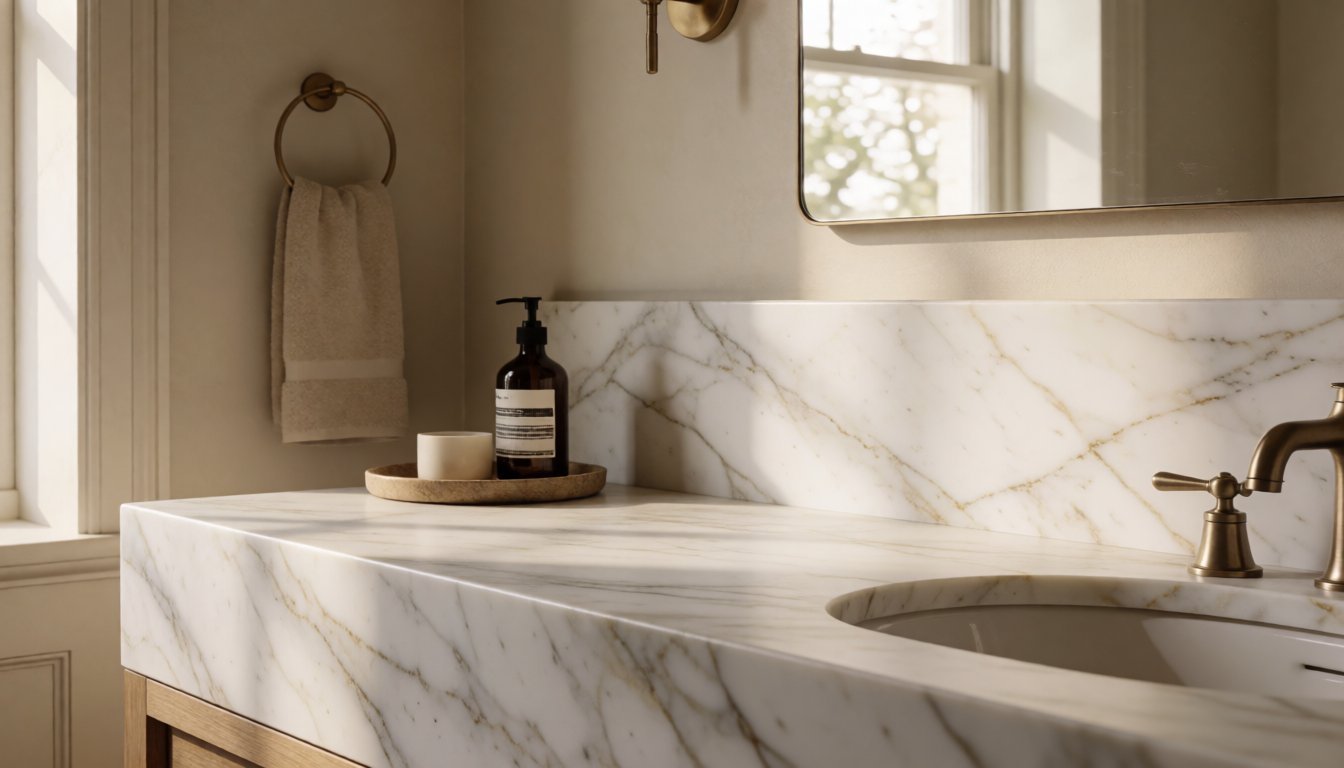
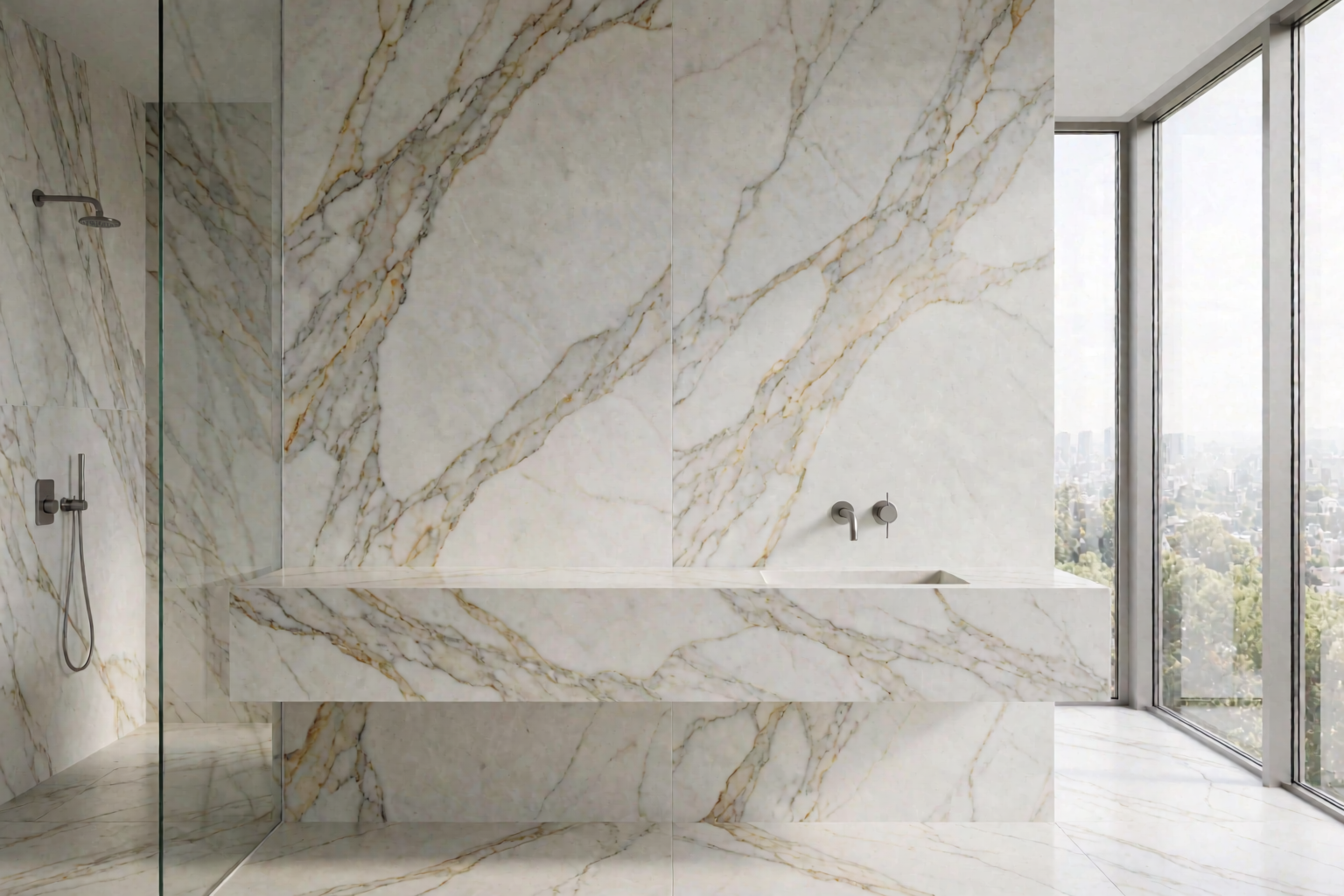
A countersplash is a continuous marble surface that carries the same stone from the vanity countertop up the wall, eliminating the traditional tile backsplash seam. In 2026, designers specify countersplashes because they create a seamless, monolithic stone environment that reads as quieter, more permanent luxury than matched tile.
What Is a Countersplash?
A countersplash is the logical endpoint of the “stone-drenching” movement: instead of stopping the counter at the wall and starting tile, one slab wraps upward. The result is a single uninterrupted plane of natural stone.
Why Is the Countersplash Trending in 2026?
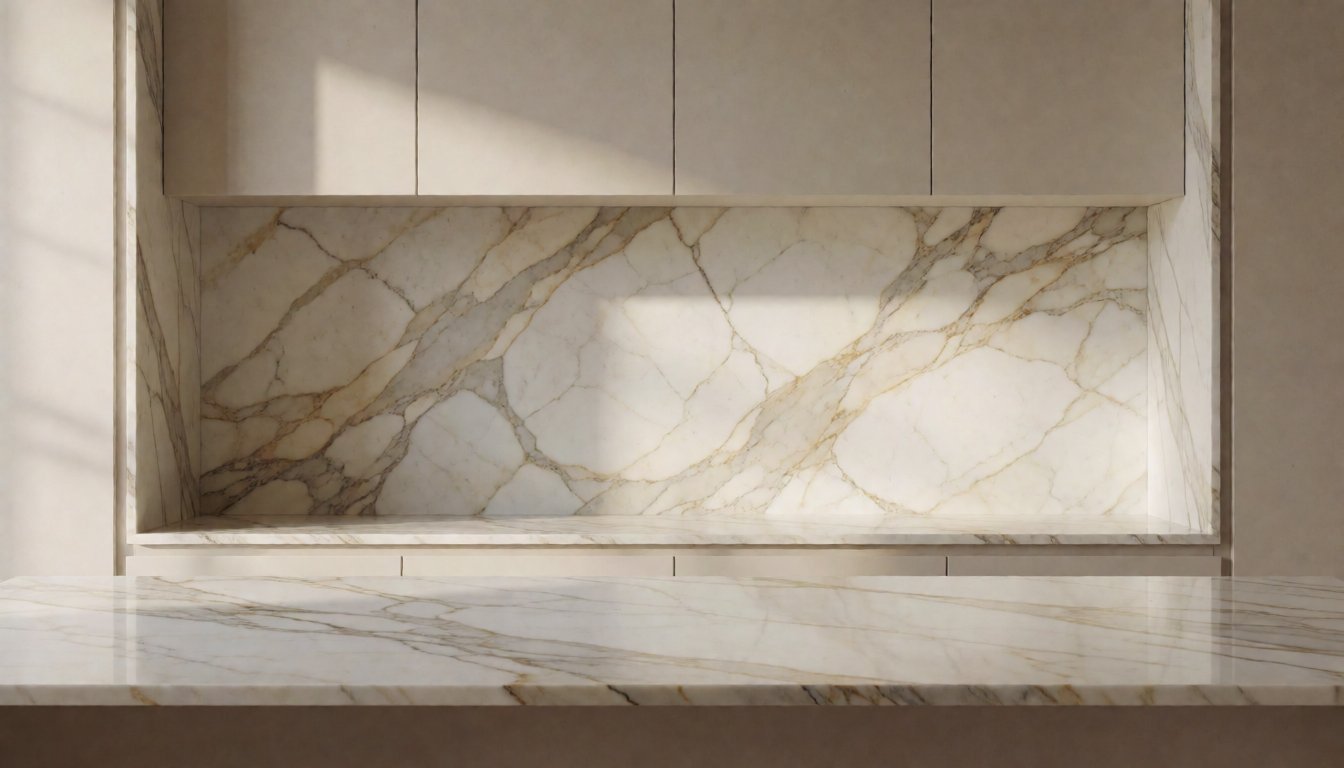
- Seamless luxury: zero grout line between counter and wall.
- Hygiene win: no joint for soap film and mildew to hide in.
- Simpler schedule: one stone, one finish, one supplier.
How to Design a Seamless Marble Countersplash
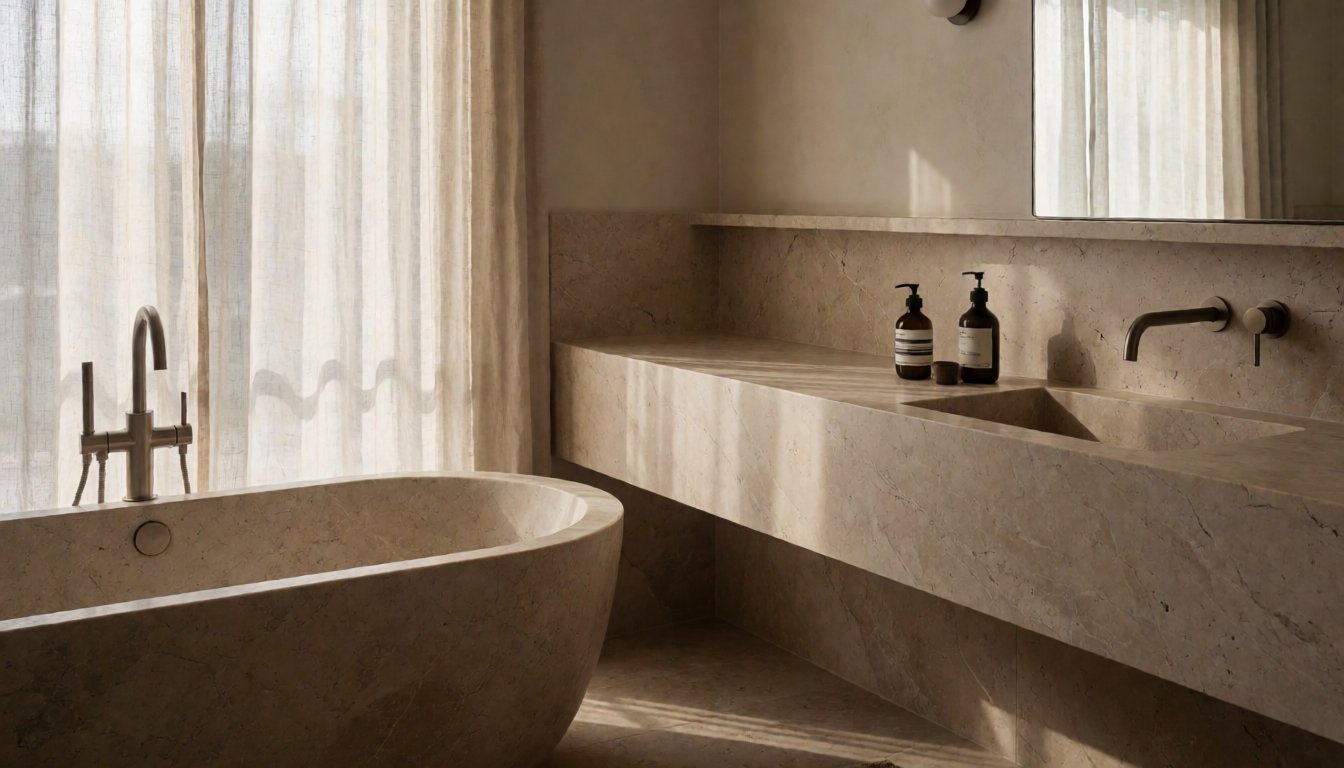
In 2026, the countersplash has moved from boutique hospitality projects into residential specifications as homeowners reject the cold, clinical look of stainless and tile. According to surface manufacturers, demand for book-matched slab runs long enough to wrap a counter into a backsplash without a visible seam rose by roughly 40% year over year, driven by the ‘stone-drenching’ movement that wraps walls, floors, and counters in one material. The technical win is real: eliminating the grout line between counter and wall removes the single most common place for mildew and soap film to accumulate in a bathroom. For architects, the countersplash also simplifies the material schedule — one stone, one finish, one supplier — which shortens lead times and reduces the risk of tone mismatch that plagues mixed-material bathrooms. Large-format slabs of 3200 by 1600 millimetres are now standard for this application, letting a single piece cover both surfaces with zero joins.
| Application | Traditional Detail | 2026 Countersplash Approach | Benefit |
|---|---|---|---|
| Vanity | Counter + tile backsplash | One continuous marble slab | No grout, no mildew |
| Shower | Tiled walls | Full marble slab wrap | Seamless, spa-like |
| Kitchen | Counter + tiled splash | Stone carried up the wall | Unified schedule |
| Fireplace | Painted surround | Book-matched marble | Gallery focal point |
Frequently Asked Questions
What is the difference between a backsplash and a countersplash?
A backsplash is tiled; a countersplash continues the same counter slab upward with no seam.
Does a marble countersplash need sealing?
Yes — treat it like a countertop, resealing every 6–12 months in wet areas.
Can I retrofit a countersplash in an existing bathroom?
Often yes, if the wall is flat; a fabricator templates the slab to wrap the corner.
Which marble works best for a countersplash?
Honed Calacatta or Arabescato perform well and hide water spots better than polished stone.
Glady Stone: Marble Surfaces for Seamless Interiors
Glady Stone supplies large-format marble slabs and full slabs ideal for countersplash and stone-drenching installations in 2026.
Discover the Glady Stone natural stone slab collection for seamless counter-to-wall designs.