A travertine dining table is a table topped with travertine, a warm, porous limestone prized for its earthy ivory and walnut tones and natural pitting. In 2026 it has become the go-to stone top for designers seeking a tactile, wabi-sabi calm that polished marble no longer delivers.
What Is Travertine?
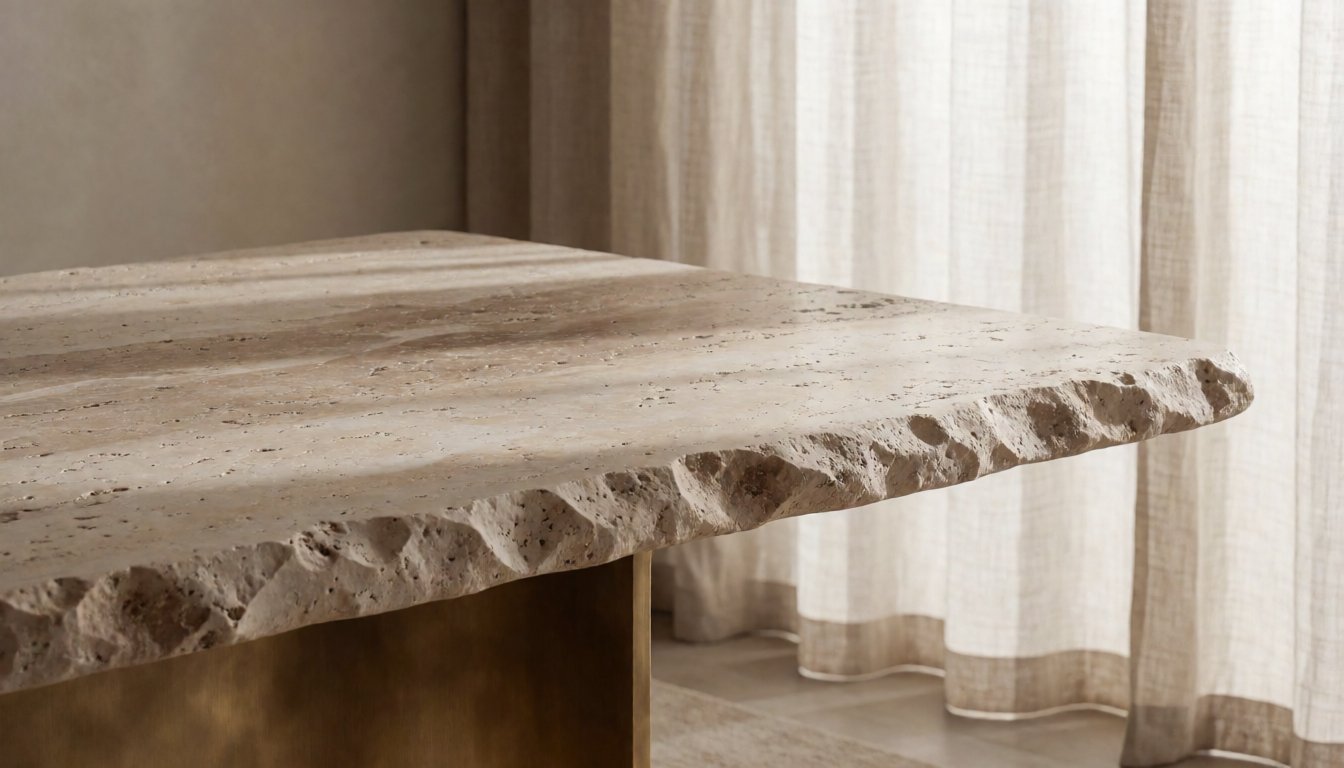
Travertine is a sedimentary limestone formed in mineral hot springs, famous for soft beige, cream, and walnut tones and a surface that can be left naturally pitted or filled and honed smooth. Unlike high-contrast marble, its quiet movement reads as warm and grounded. When used as a dining table top, travertine brings the “lived-in luxury” mood that defines 2026 interiors — a table that feels touched by geology rather than machined in a factory.
Why Are Raw Stone Tops Trending in 2026?
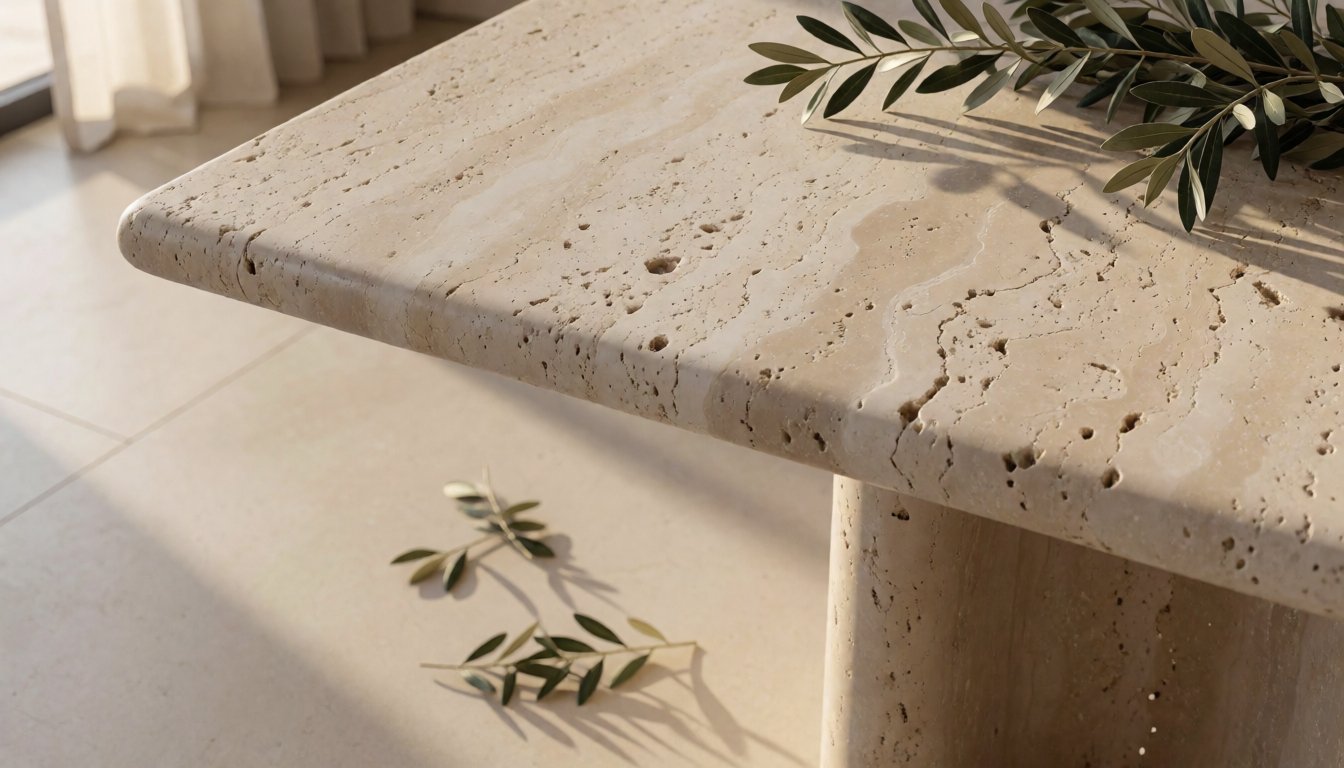
- Wabi-sabi appeal: Unfilled travertine celebrates imperfection and texture, the opposite of sterile gloss.
- Warm palette: Earthy ivory and walnut tones replace cold grey-and-white stone across 2026 homes.
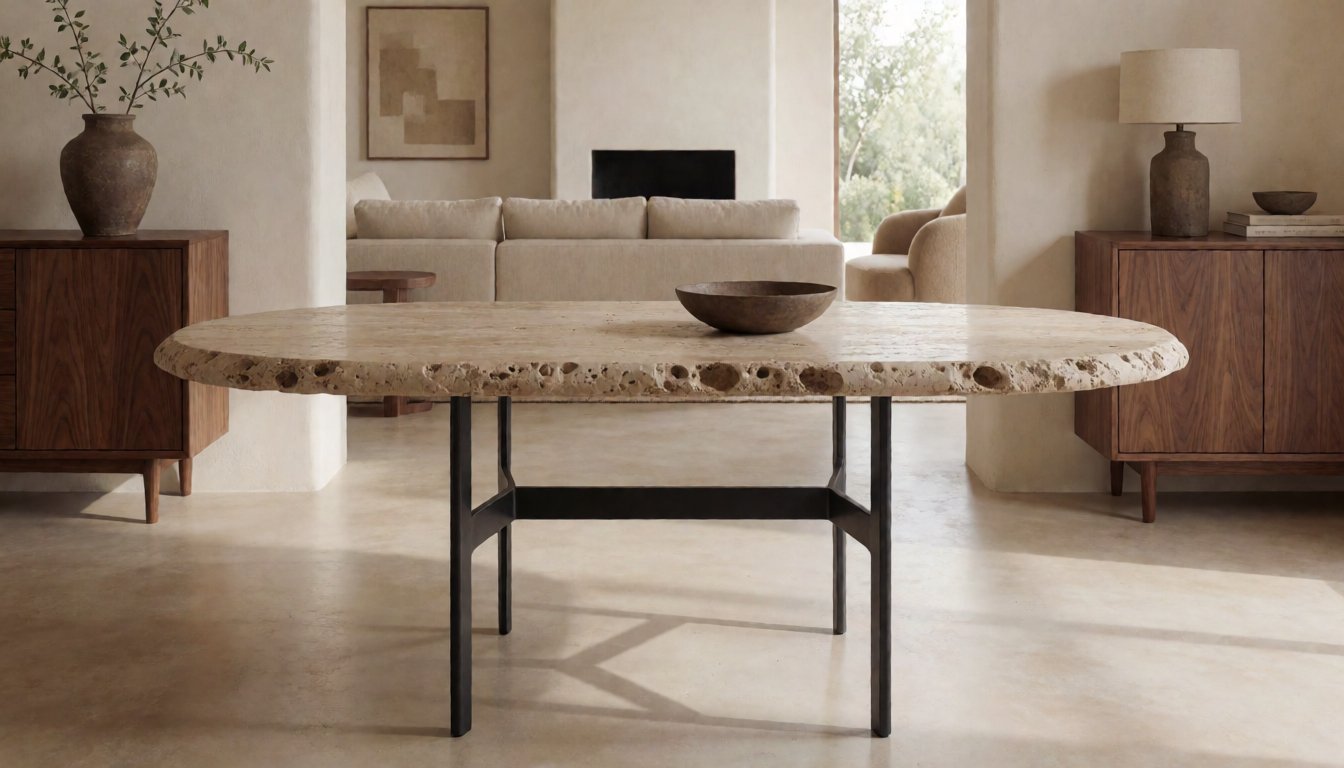
- Mixed-material pairing: Travertine’s roughness contrasts beautifully with sleek black iron or brushed brass bases.
Travertine has returned because it answers the biggest 2026 design shift: away from showroom perfection and toward materials that feel honest and tactile. A travertine top pairs with slim metal or wood bases to create a dining table that anchors a room without dominating it, encouraging the long, conversational meals open-plan homes are built around. Designers increasingly specify a Nano-Polyester shield on the stone, an invisible treatment that seals the pores so the table resists wine and oil like glass while keeping its raw look. According to furnishing search data, interest in travertine and matte stone dining tables rose through 2025 and now shapes a meaningful share of 2026 luxury specifications, especially in warm-climate and Mediterranean-style projects where the stone’s tonal range feels native.
Travertine vs. Other Stone Tops
| Stone | Tone | Texture | Sealing Need |
|---|---|---|---|
| Travertine | Ivory / walnut | Pitted or honed | Every 6-12 months |
| Carrara Marble | White / grey | Smooth, cool | Every 12 months |
| Calacatta | White / gold vein | Polished or honed | Every 12 months |
| Onyx | Translucent, bold | Glossy | Every 12 months |
How to Care for a Travertine Table
- Seal the top before first use and re-test with the water-drop method every six months.
- Use coasters and trivets; acidic drinks and hot dishes can etch or stain raw stone.
- Wipe with a pH-neutral cleaner and dry the surface to avoid water marks in the pits.
Frequently Asked Questions
Does travertine stain easily as a dining table?
Unsealed, yes. With a modern penetrating or Nano-Polyester sealer, everyday wine and oil wipe clean, much like sealed marble.
Filled or unfilled travertine for a table top?
Filled-and-honed is more practical for dining; unfilled reads more sculptural but traps crumbs in the pits.
Is travertine durable enough for daily use?
Yes. It is a real limestone used for millennia; with sealing it handles family dining for decades.
Glady Stone: Stone Tables for 2026
Glady Stone supplies travertine, marble, and onyx table tops to furniture wholesalers and designers, with custom dimensions and sealer-ready finishing.
View the Glady Stone natural stone table top collection for 2026 sizing and stone options.