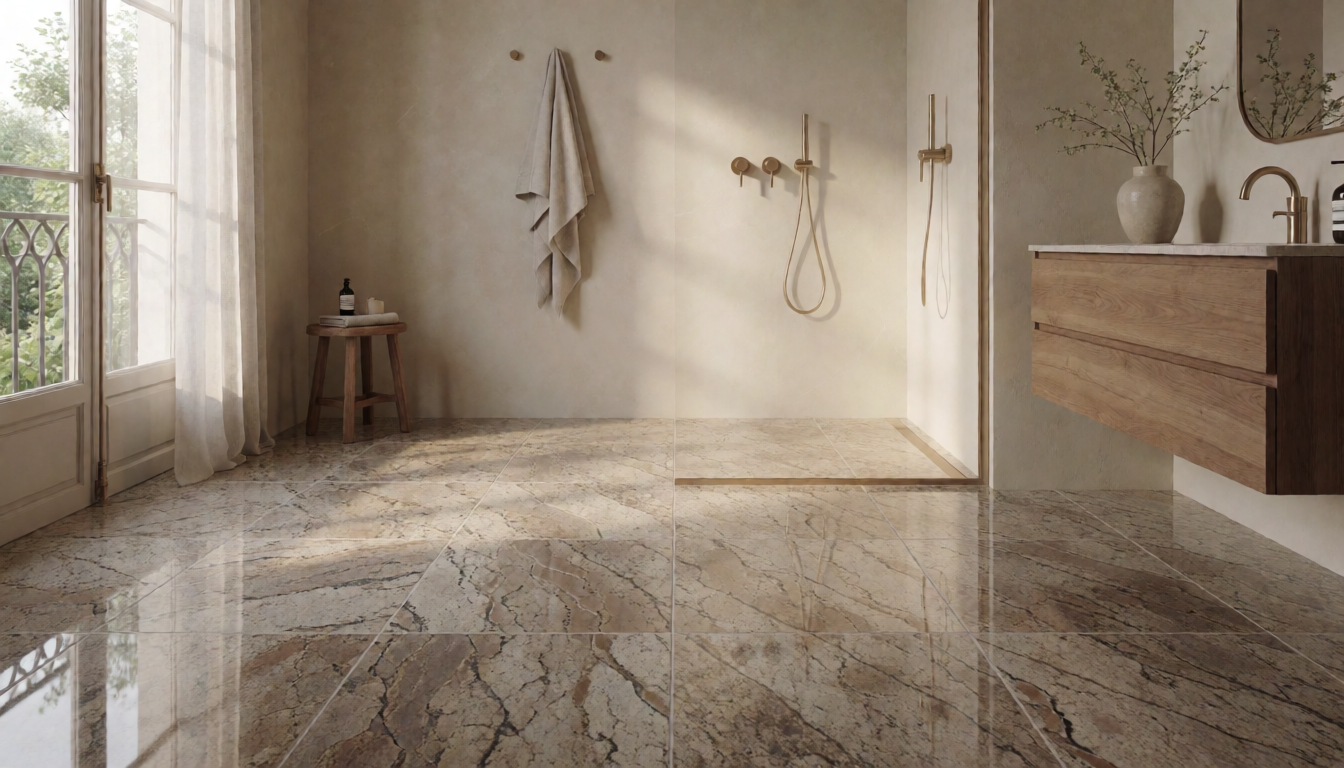
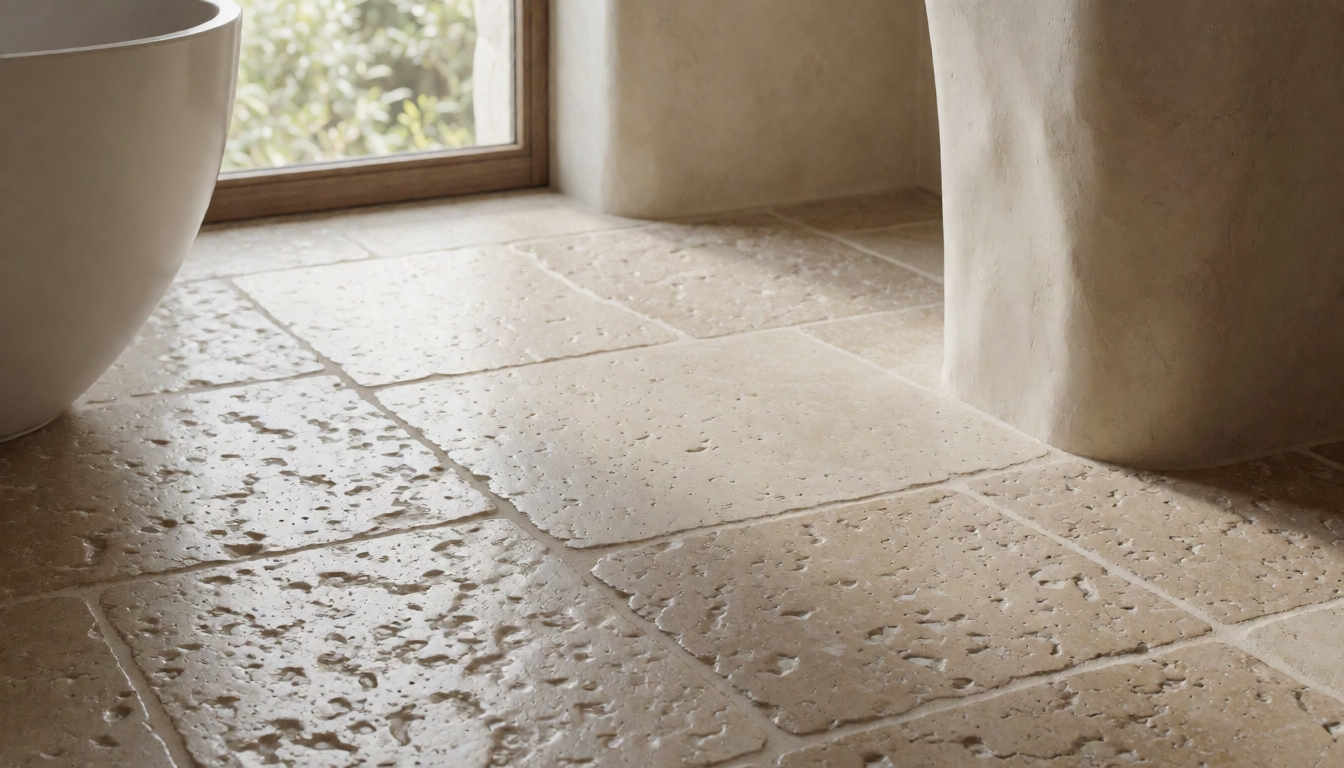
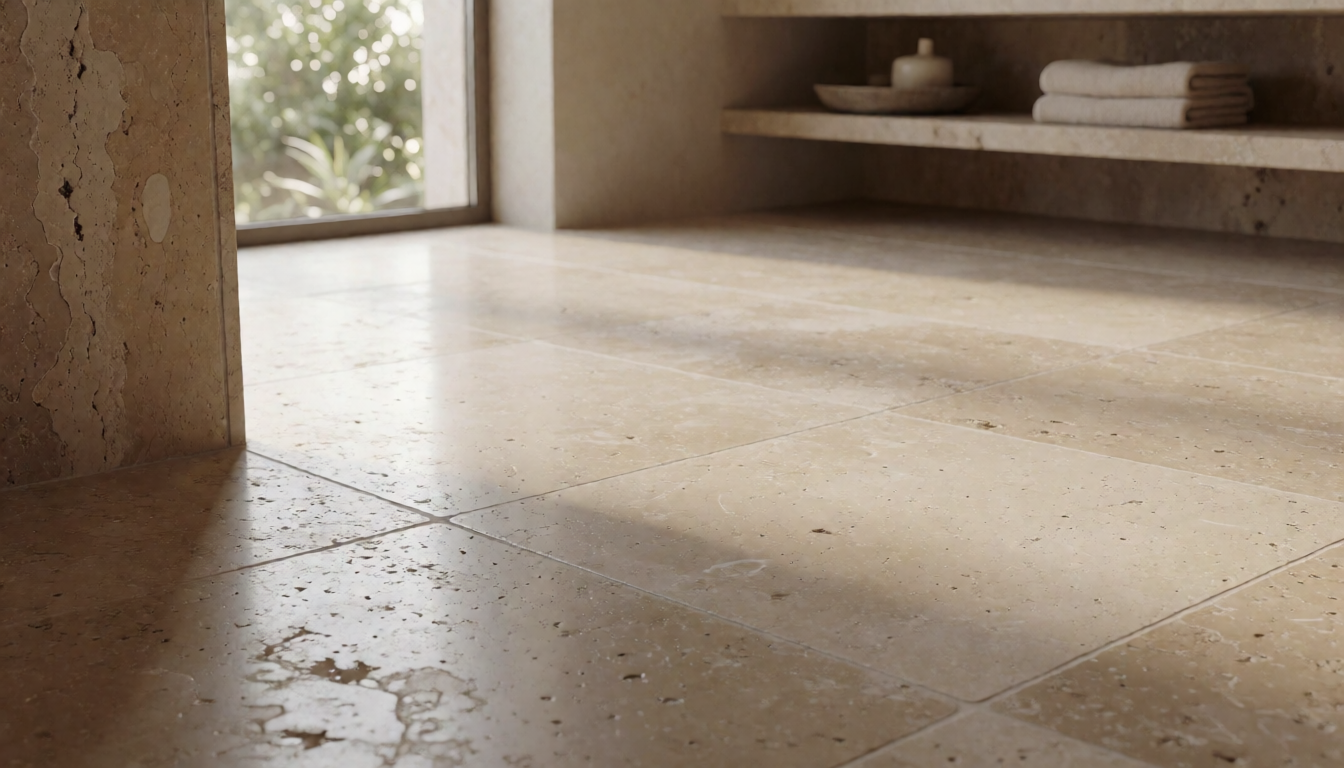
The most durable natural stone for bathroom floors in 2026 is honed granite, followed by dense limestone and textured travertine. Granite resists moisture and abrasion best, while proper sealing lets marble and travertine perform well and durably in low-traffic residential baths.
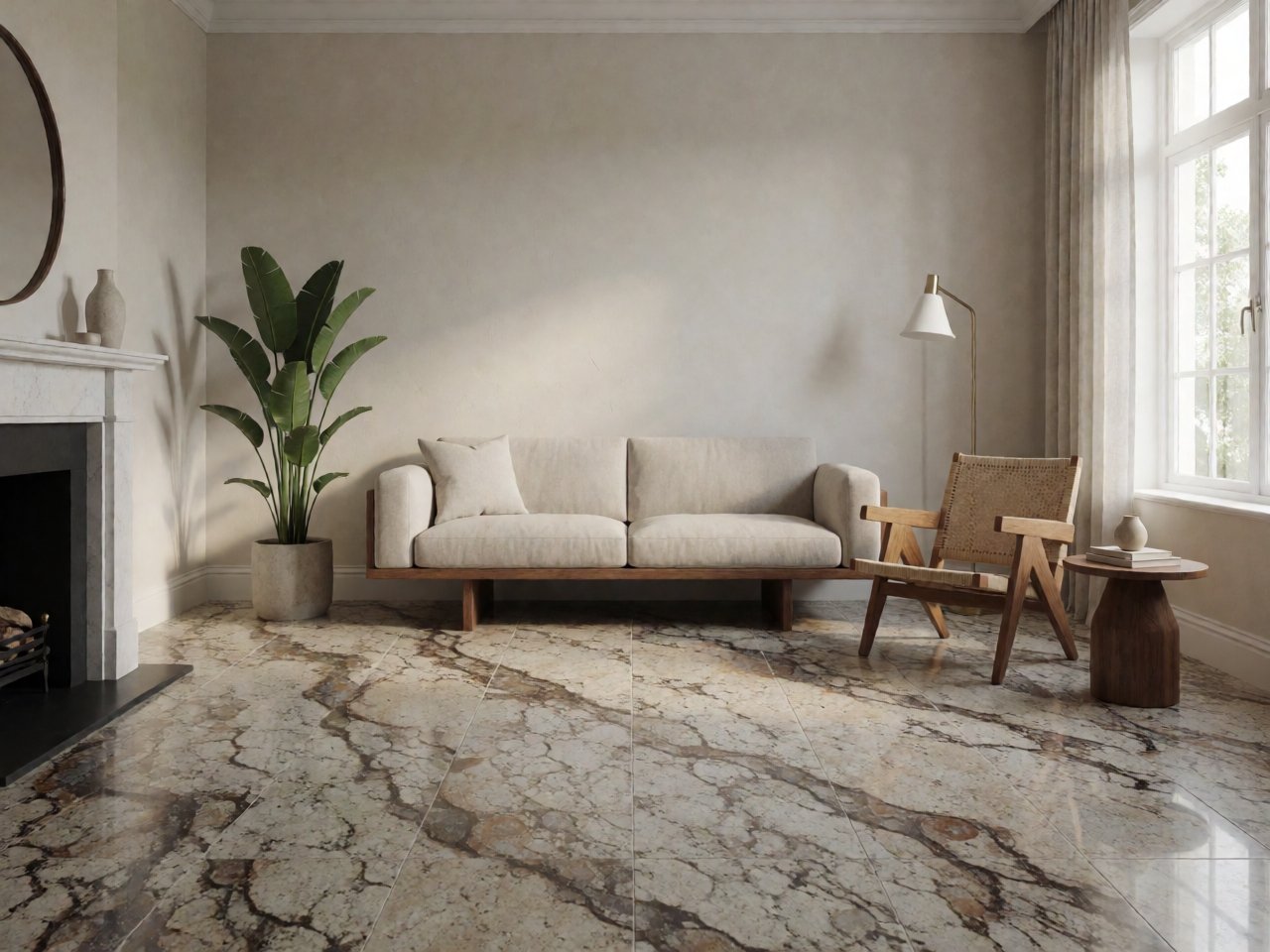
What Is the Most Durable Natural Stone for Bathroom Floors?
The durability of a stone bathroom floor depends on two properties: hardness (resistance to abrasion) and absorbency (resistance to moisture). Granite is the hardest common natural stone and barely absorbs water, which is why it leads 2026 specifications for busy family and commercial bathrooms. Dense limestone and filled travertine sit in the middle, offering warmth and character at moderate traffic levels. Marble is softer and more prone to etching, so designers reserve it for powder rooms and low-traffic master baths where drama matters more than daily abuse. The single most important factor across all stones is the sealer: an impregnating sealer applied every 12 to 24 months determines whether a floor stays stain-free for decades. According to StoneTrades’ 2026 guidance, finish also matters—textured and honed surfaces provide better slip resistance than polished stone, a critical safety point in wet rooms and family bathrooms.
Why Does Floor Durability Matter More in 2026 Bathrooms?
- Wet rooms: Open, drain-floor bathrooms expose stone to standing water daily, raising the bar for absorbency resistance.
- Resale value: SurfacesGalore notes stone-drenched baths correlate with 3–7% higher luxury sale prices, so floors must last.
- Large-format slabs: 2026 favours fewer, bigger tiles—mistakes in a fragile stone are expensive to replace.
Granite vs. Marble vs. Travertine vs. Limestone
| Stone | Hardness | Sealing Frequency | Best Use |
|---|---|---|---|
| Granite | Very high | Every 24 mo | Busy / commercial baths |
| Limestone | Medium | Every 12–18 mo | Warm residential floors |
| Travertine | Medium | Every 12–18 mo | Spa-style wet rooms |
| Marble | Lower | Every 12 mo | Powder / low-traffic |
How to Choose the Right Stone Floor for Your Project
- Map traffic: High-traffic and commercial → granite; low-traffic residential → marble or travertine.
- Pick the finish: Choose honed or textured for slip safety; reserve polished for dry powder rooms.
- Specify sealing: Require factory pre-seal plus a written on-site re-seal schedule.
Frequently Asked Questions
Is marble too soft for a bathroom floor?
For busy family baths, yes—it etches easily. In powder rooms and low-traffic master baths, sealed marble performs beautifully and looks stunning.
Does travertine need filling before installation?
Usually yes. Most travertine ships filled with resin or grout to close its natural pores; unfilled travertine is a deliberate rustic choice but needs more sealing.
How often should a stone bathroom floor be sealed?
Every 12 to 24 months depending on stone and traffic. The water-droplet test—if water darkens the surface, it is time to reseal.
What finish is safest underfoot?
Honed or textured (leathered) finishes. Polished stone becomes slippery when wet and is not recommended for shower floors.
Glady Stone: Natural Stone for Floors and Walls
Glady Stone supplies honed granite, travertine, limestone, and marble in large-format slabs and tiles, pre-sealed for bathroom flooring and wall-cladding projects across residential and hospitality sectors.
Browse the Glady Stone natural stone bathroom flooring collection to compare durable stone options for your 2026 specification.